圖馬莫克山
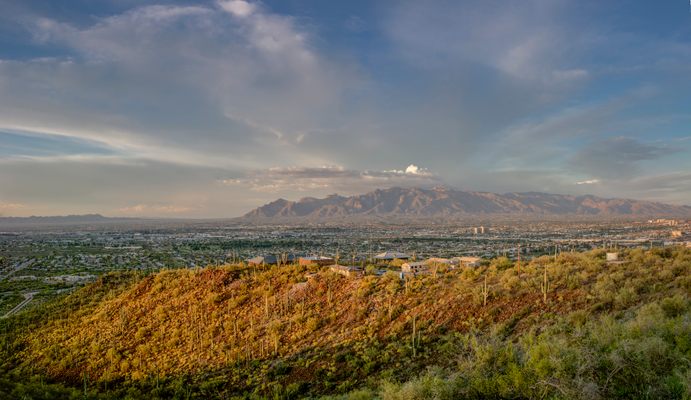
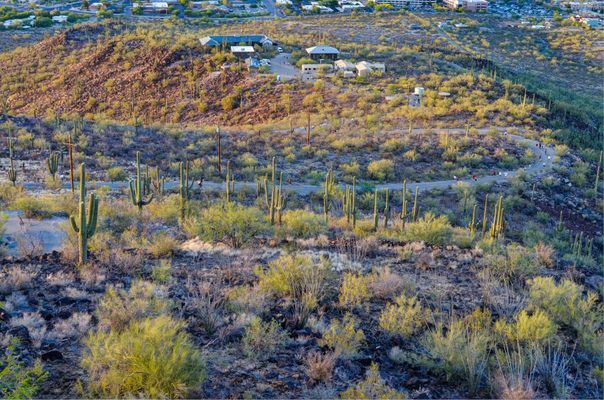
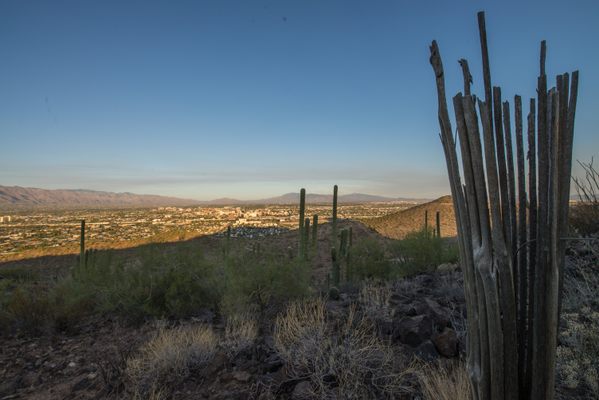
Hikers and walkers flock to this historic volcanic butte for its scenic desert views.
關於這個地點
Just west of downtown Tuscon stands Tumamoc Hill, also known as Chemamagi Du’ag , or Horned Lizard Mountain. It is a volcanic butte with deep scientific and historic significance.
The site is an 860-acre ecological reserve and U.S. National Historic Landmark. Established by the Carnegie Institution in 1903, it became home to an early desert laboratory, created to study how plants adapt to desert conditions. The University of Arizona owns and manages much of the site, and it is still an active research location.
Not just a spot for ecological research , Tumamoc Hill has a history of human activity that runs much deeper. Radiocarbon dating places early maize cultivation at around 4,100 years ago, which makes it the longest continuously inhabited site in the United States. The area was also once home to the Hohokam people, starting around the the year 400; this culture left behind petroglyphs and pottery fragments. The Tohono O’odham Nation, for whom Tumamoc Hill still holds sacred significance, descends from this group.
Today, the site is not just used for research—but recreation. About one-thousand people walk the hill each day, taking in the scenic views of the surrounding desert landscape. It is a three-mile round trip walk, with a 700-foot rise in elevation from bottom to top.
每週透過 Atlas Obscura Places 通訊了解更多不尋常和非凡的地方。
您向我們訂閱的電子報須遵守 Atlas Obscura 的隱私權政策和使用條款。
延伸圖集