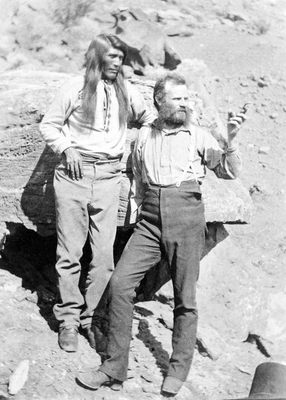
鮑威爾紀念館 封面圖
地點Grand Canyon Village

鮑威爾紀念館

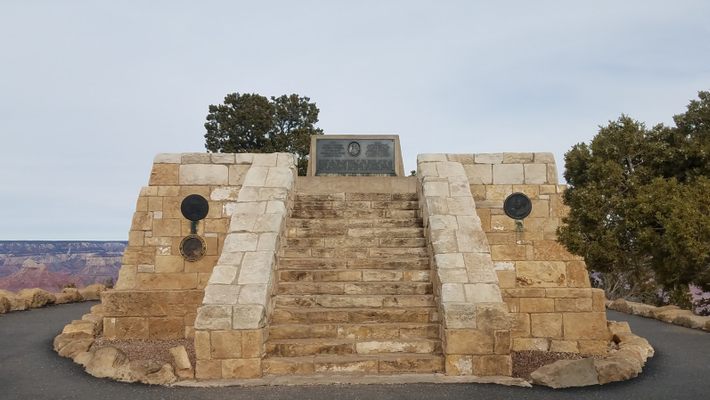
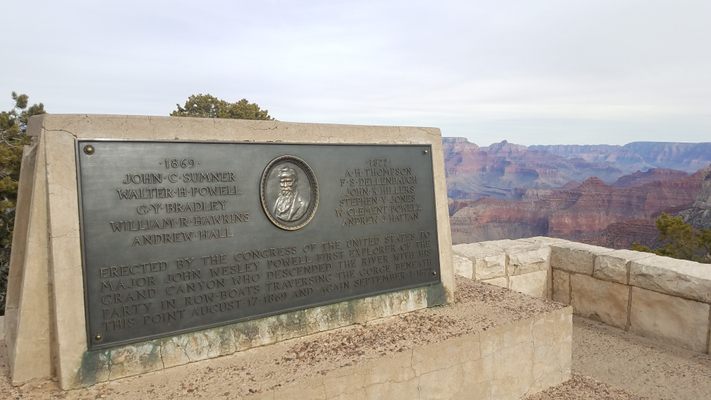
A monument to the one-armed geologist who led the first documented expeditions through the Grand Canyon.

關於這個地點

On August 30, 1869, Major John Wesley Powell and five companions brought their rowboats ashore at St. Thomas, Nevada . Having departed from Green River , Wyoming , with nine men three months earlier, Powell and his crew became the first white people confirmed to have traveled through the entirety of the Grand Canyon.

Powell grew up in rural Illinois and had a largely self-taught education. As a young man, he frequently set off on journeys to satisfy his own need for adventure, including spending four months walking across the state of Wisconsin and rowing a boat down the Mississippi River from Minnesota to the Gulf of Mexico. In part because of these exploits, when he was 25 years old he was admitted to the Illinois Natural History Society and began taking classes at Oberlin College. His studies were interrupted by the American Civil War, however, and he dropped out of school and enlisted in the Union Army.

Powell was initially put to work scouting and creating maps, but was eventually promoted to leading artillery brigades. During the Battle of Shiloh, a bullet hit his right arm, requiring most of it to be amputated. Despite this, he returned to military service for the rest of the war, earning the rank of Lieutenant Colonel. After the war, Powell accepted a position as professor of geology at Illinois Wesleyan University, but soon found a new calling in the exploration and mapping of the American West.

After proving his capability with several smaller surveys in the Rocky Mountains, Powell was able to convince the Smithsonian Institute and the United States Army to provide material support to a much more ambitious project, the mapping and geological study of the Green and Colorado Rivers, including the Grand Canyon. Powell recruited a team of frontiersmen, Civil War veterans, and amateur scientists, and they departed from Green River on May 24, 1869, in four wooden rowboats.

The Powell Expedition of 1869 was fraught with perils. Only a few days into the journey, one of the four rowboats capsized and many supplies were lost. Also early on in the trip, Englishman Frank Goodman, who traveled to the American West seeking a thrilling adventure and paid to join the expedition, decided that he had had enough and simply left, settling down and spending the rest of his life in nearby Vernal , Utah .

The river rapids provided most of the hurdles along their way. As they ventured, Powell would attempt to judge whether it was better to try and run them, which was risky and could easily result in the injury of men and the loss of supplies, or to pull the boats ashore and carry everything downriver to a safer point, which was tedious and tiring work. Having already lost one of his four boats, Powell frequently erred on the side of caution and ordered everything carried around the troublesome parts of the river. This greatly slowed their progress and required them to ration food.

延伸圖集

鮑威爾紀念館 圖集照片
鮑威爾紀念館 圖集照片
鮑威爾紀念館 圖集照片
鮑威爾紀念館 圖集照片
鮑威爾紀念館 圖集照片
鮑威爾紀念館 圖集照片

延伸 Arizona 發現

回到總覽
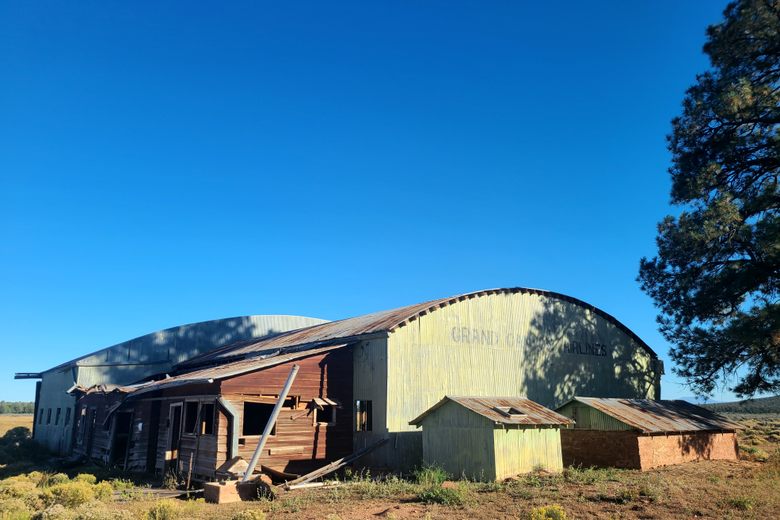
紅山機場 封面圖
地點Coconino County
紅山機場

Built in 1927, the now-abandoned airfield once hosted notable pilots including Amelia Earhart and Charles Lindbergh.

AirplanesTransportationAircraft