Petroglyphs at Signal Hill
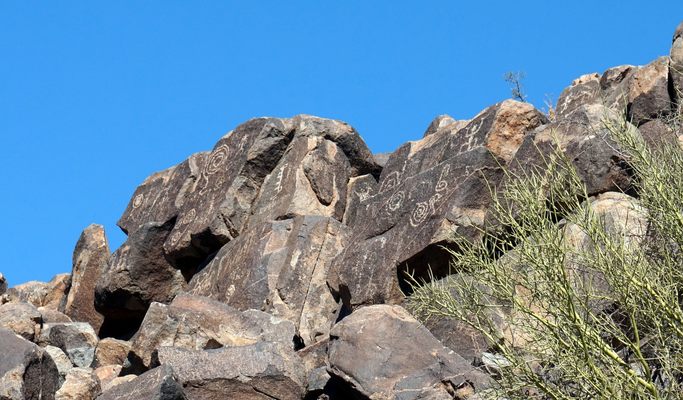
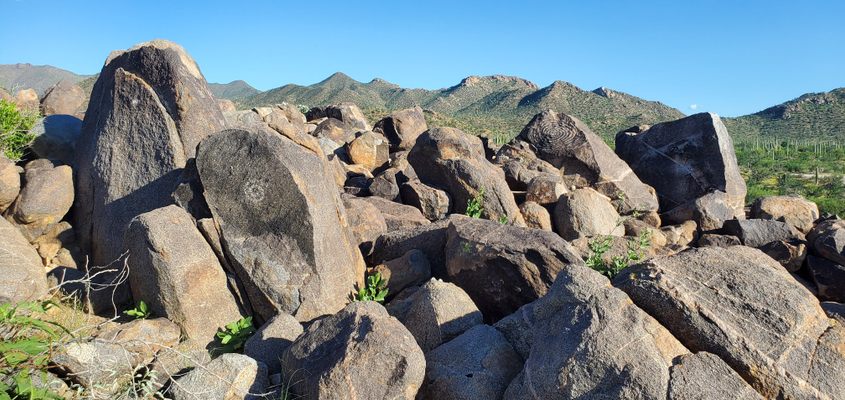
This small hill features the most notable collection of petroglyphs in Saguaro National Park.
關於這個地點
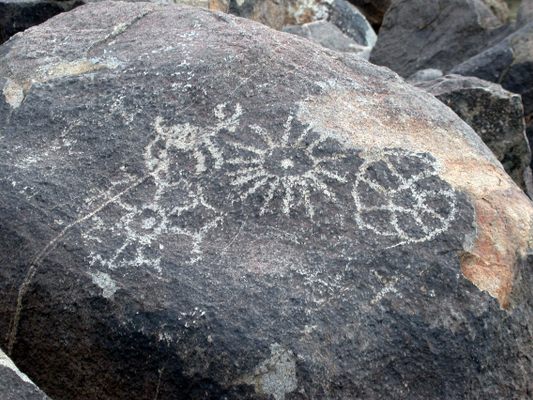
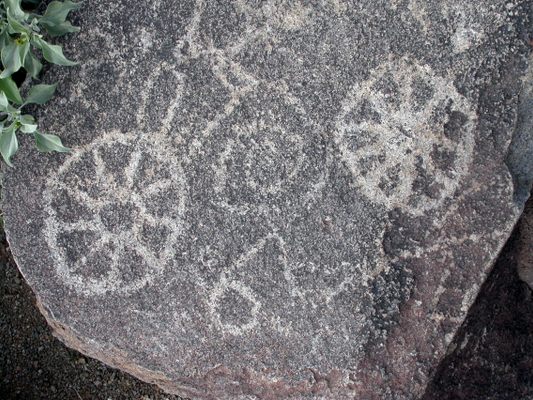
One of southern Arizona’s most prominent petroglyph sites is Signal Hill in the Tucson Mountain District of Saguaro National Park. This location features over 200 petroglyphs created by the Hohokam (the predecessors to today’s Akimel O’odham and Tohono O’odham tribes). The exact dates have been difficult to establish, but archeologists believe the petroglyphs were first etched sometime between 550 and 1,550 years ago.
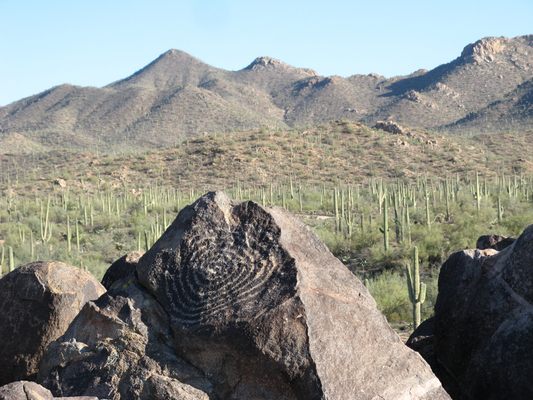
The designs, which were created by pecking into the desert varnish coating the rocks on the hills, feature depictions of people, animals including bighorn sheep, snakes, and lizards as well as many geometric symbols such as segmented circles and spirals. The most notable petroglyph at the site is a very large spiral on a rock near the hill’s summit. As with many petroglyphs, the exact purpose and meaning of the artwork has been lost to time.
In the late 19th and early 20th centuries, visitors began to travel west into the desert and over the Tucson Mountains to see the petroglyphs. In the 1930s, the Civilian Conservation Corps created both the picnic area at the base of the hill as well as the trail to the top that are now as much a part of the history of the park as the petroglyphs themselves.
The area was incorporated into Saguaro National Monument in 1961, and the monument became a park in 1994. Tourists visiting today can now follow this trail to the top to see the site’s petroglyphs and to admire the views of the surrounding Sonoran Desert wilderness.
每週透過 Atlas Obscura Places 通訊了解更多不尋常和非凡的地方。
您向我們訂閱的電子報須遵守 Atlas Obscura 的隱私權政策和使用條款。
延伸圖集