Lee's Ferry and Lonely Dell 封面圖
地點Marble Canyon

Lee's Ferry and Lonely Dell

This isolated outpost was once the only place to cross the Colorado River for hundreds of miles.

關於這個地點

For much of the history of the United States, crossing the Colorado River proved a near insurmountable challenge. Impassable canyon cliffs lined the river for hundreds of miles, and in places where one was able to get down to the river's shore there were usually formidable rapids or cliffs awaiting on the opposite side. At one spot however, where the Paria River meets the Colorado River in what’s now northern Arizona, there’s a relatively calm section of river with lower banks. It was here, in the far corner of Mormon country, that Mormon president and Utah territorial governor Brigham Young dispatched John D. Lee to operate a ferry to allow the crossing of the Colorado River.

Lee arrived in the area that would come to bear his name in 1870, bringing two of his wives and many of his children with him. Although a prominent and influential early Mormon pioneer, Lee was sent to this faraway posting in an attempt to hide him from the federal government, which was working to prosecute the perpetrators of the Mountain Meadows Massacre , the slaughter of 120 pioneers from Arkansas who were passing through the Utah territory in 1857.

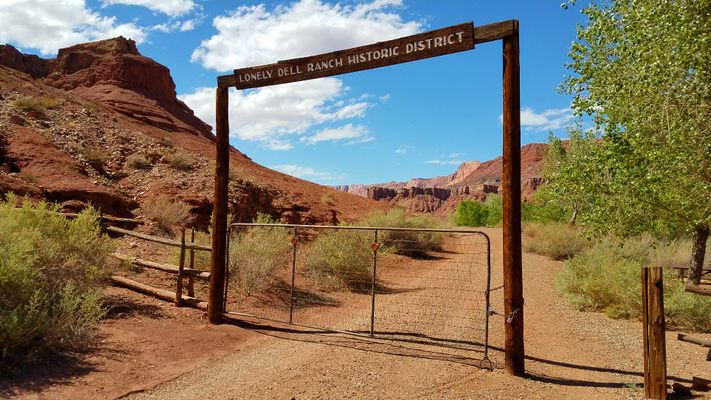
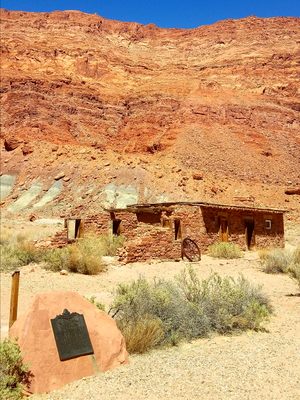
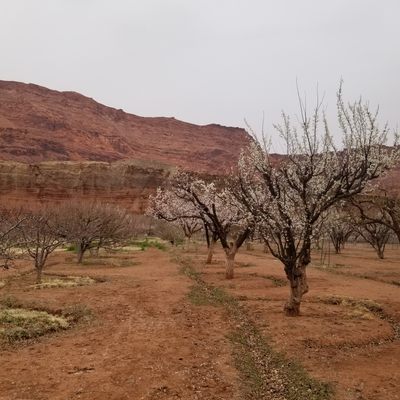
In the first few years after Lee arrived, he constructed a ranch for his families that he named “Lonely Dell” and built the infrastructure for the ferry service, which was up and running in 1873 and soon attracted hordes of travelers. In 1874, relations between the Mormon settlers and the Navajo grew tense, so a fort was constructed at the ferry, although it never saw official use and was soon converted into a trading post.

In 1877, the law finally caught up to Lee and he was executed for his role in the Mountain Meadows Massacre 20 years prior. After Lee's execution, his wife Emma ran the ferry until 1879 when the Mormon Church purchased the ferry from her and sent new caretakers to operate it.

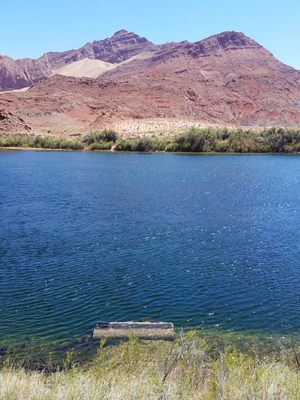
Over the decades, Mormon pioneers continued to run the ferry and Lonely Dell was continually expanded. In the early 1900s there was a boom of gold prospecting in southern Utah and northern Arizona and mining companies used Lee's Ferry as a base of operations. The most notable of these was the American Placer Company, led by Charles Spencer. Spencer hauled in tons of equipment, including a 92-foot long steamboat, but the gold in the area was too meager and his expenses were too high.Spencer left the area broke in 1912, abandoning his equipment and the steamboat behind. The steamboat sank in 1921 but can still be seen today at the bottom of the Colorado River.

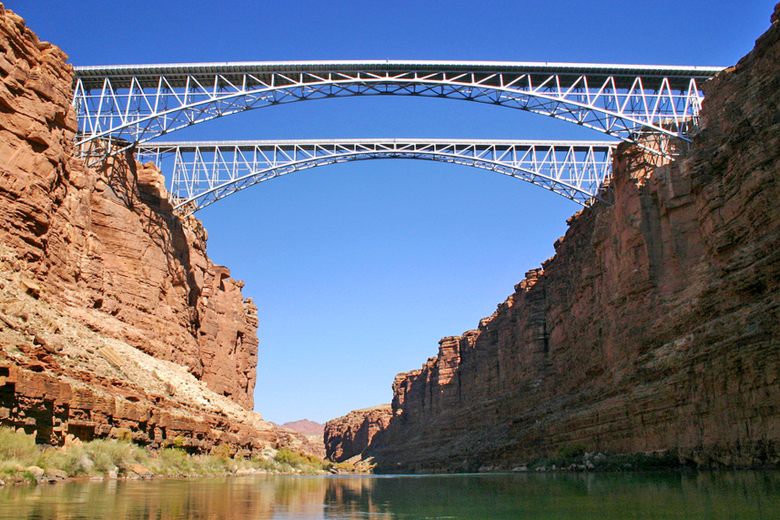
In 1928, in what became the last ever crossing at Lee's Ferry, the ferryboat sank and three people drowned. Navajo Bridge opened seven months later, four miles downstream from Lee's Ferry, and the settlement faded into quiet obscurity.

延伸圖集

Lee's Ferry and Lonely Dell 圖集照片

延伸 Arizona 發現

回到總覽
岩畫海灘 封面圖
地點Page
岩畫海灘

Archaeologists believe this panel of petroglyphs depicting descending sheep and other figures in Glen Canyon are 3,000 to 6,000 years old.

ArchaeologyRock FormationsPetroglyphs
Navajo Bridge 封面圖
地點Marble Canyon
Navajo Bridge

When it was built in 1929, this historic bridge was the only place to cross the Colorado River for 600 miles.

RiversBridgesArchitecture