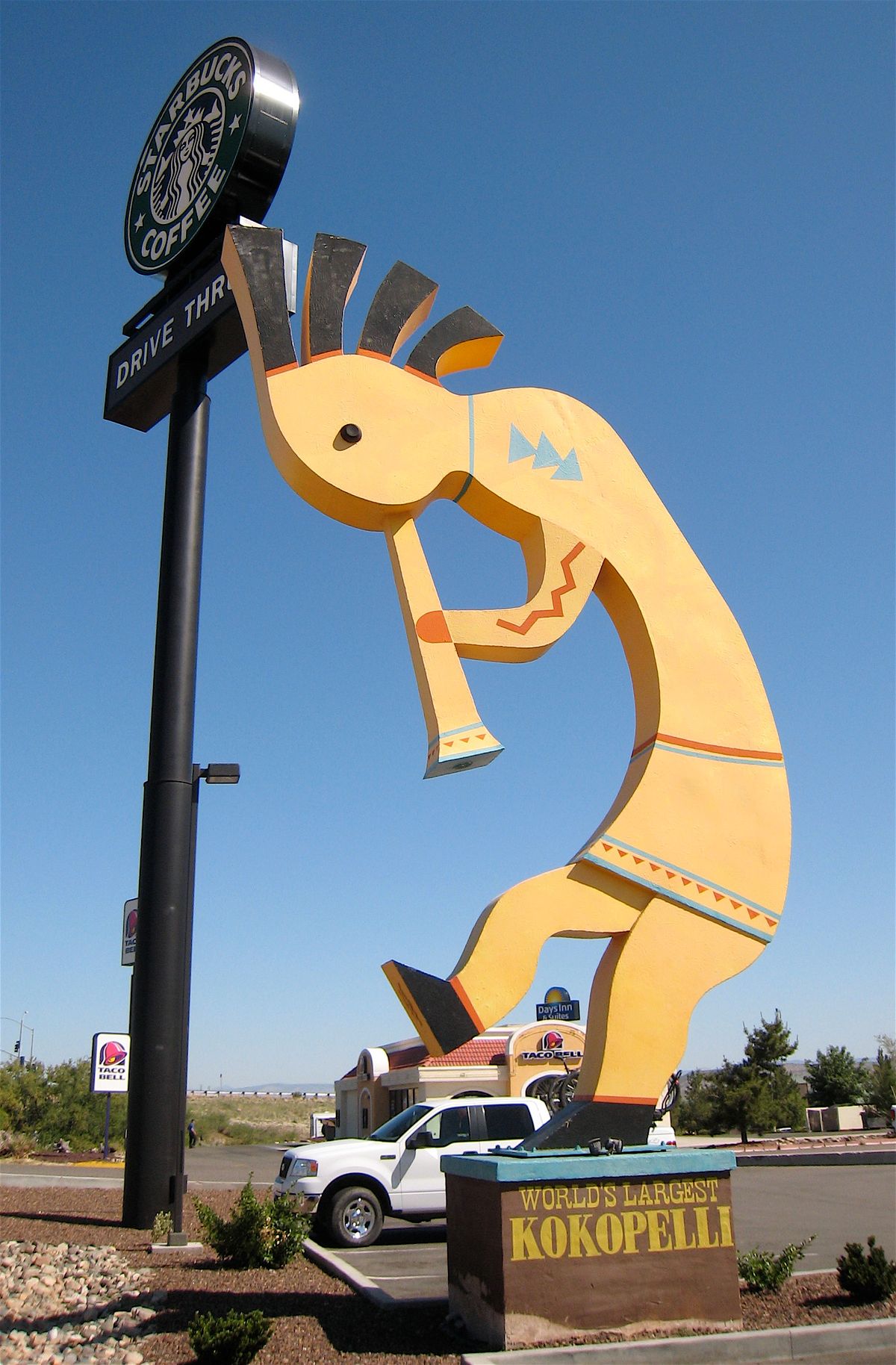
World's Largest Kokopelli
This oversized flute-playing Ancestral Puebloan deity is also a landmark of Southwestern kitsch.
About
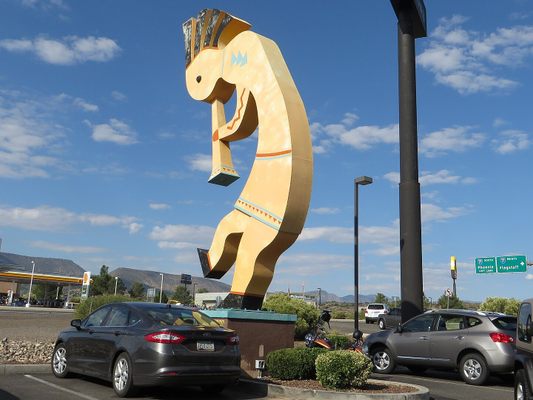
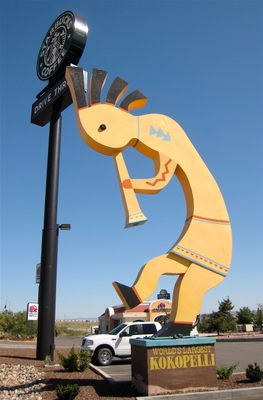
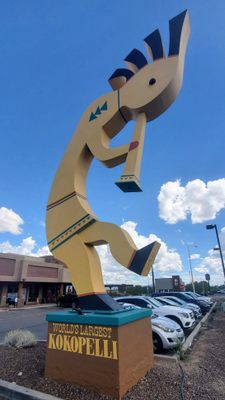
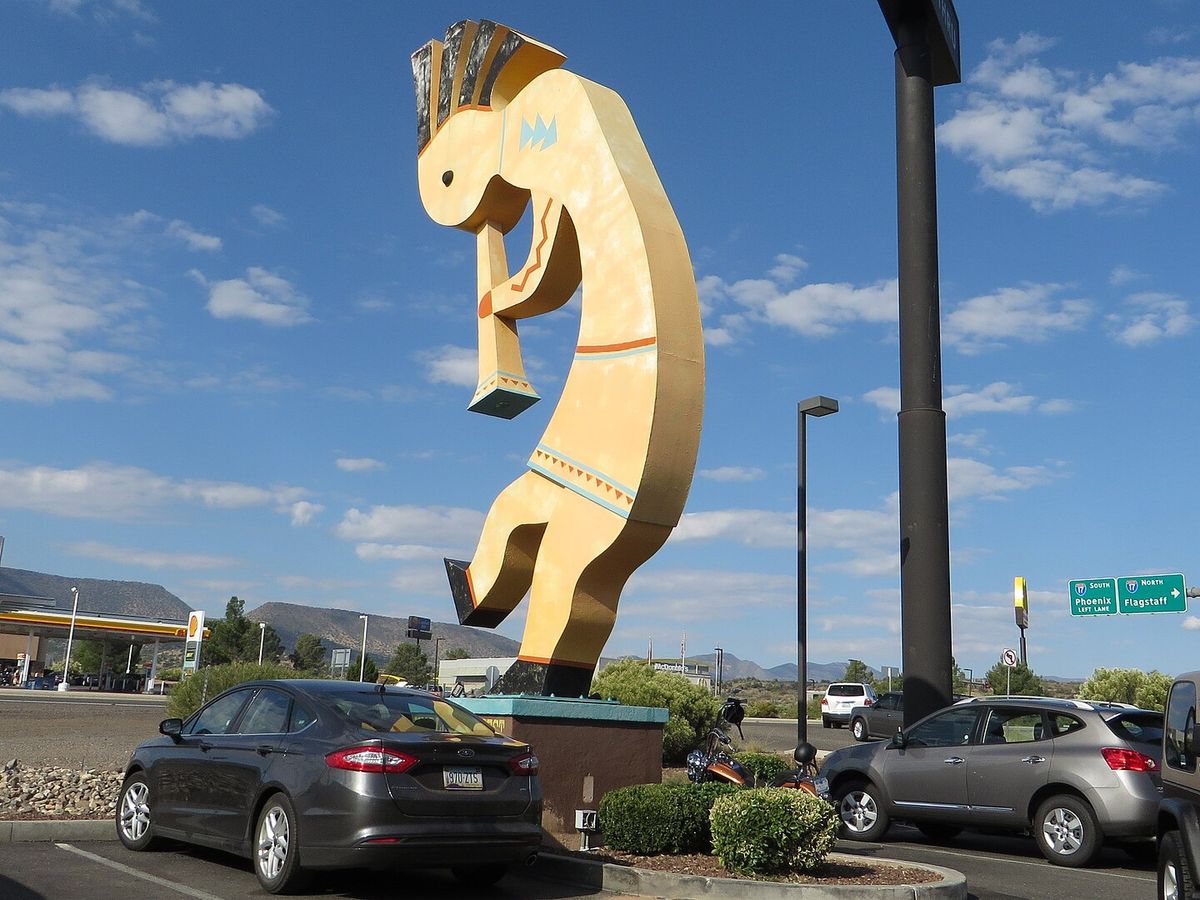
All across the Four Corners region of the United States, visitors will often come across a half-kitsch, half-spiritual figure known as Kokopelli. The popularity of the Kokopelli figure crested across the Southwest during the early 21st century, but its origins lie before the dawn of the historical record. And with more than a thousand years of history behind it, the largest and most imposing likeness of this mythic flute-playing figure can be found in a roadside Starbucks parking lot near an interstate exit.
Before Kokopelli was a kitsch attraction, it was a symbol of fertility during the era of the Ancestral Puebloan peoples and of the Hohokam, an early American civilization that was likely a precursor of the Akimel and Tohono Oʼodham Nations. There were many representations of the Kokopelli in early petroglyphs and pictographs, as well as pottery and other archaeological finds. The Kokopelli is usually playing a flute, often with an erect phallus, likely a symbol of divine masculinity. Kokopelli has survived into modernity, as the Hopi and Zuni include a similar kachina god in their pantheon.
Surprisingly, it was a non-phallic humpbacked version that launched a million t-shirt prints. Ekkehart Malotki, author of Kokopelli: The Making of an Icon , notes the rise of what he terms “Kokopellimania” by the late 1990s, as the symbol crossed into kitsch art, finding its way into jewelry, ceramics, countless mail-order catalogs, Christmas ornaments, and “Golfer-Pelli,” a Kokopelli figure swinging a golf club that was “guaranteed to improve your swing!” Malotki cites the rise of interest in petroglyphs, New Age thinking, and capitalist appropriation of Indigenous culture for the Kokopelli craze.
It was at the height of Kokopellimania that the Krazy Kokopelli Trading Post was built. The owner, Lowell Johnson, was looking for a new roadside attraction to bring visitors to what was then the Montezuma Trading Post. He hired blacksmith Gerry Berg, who together with his son, Gerry Berg Jr. built a 32-foot tall sculpture out of plate steel. Originally, a speaker was placed in the sculpture to attract visitors. Unfortunately, much like a Kokopelli, the store couldn’t get over the hump, and it closed after a few decades. However, the roadside attraction still stands today in a commercial lot, both a symbol of the long history of the Southwest and its more recent journey of cultural exchange.
Get more unusual and extraordinary places each week with the Atlas Obscura Places newsletter.
Your newsletter subscriptions with us are subject to Atlas Obscura's Privacy Policy and Terms of Use .
Gallery