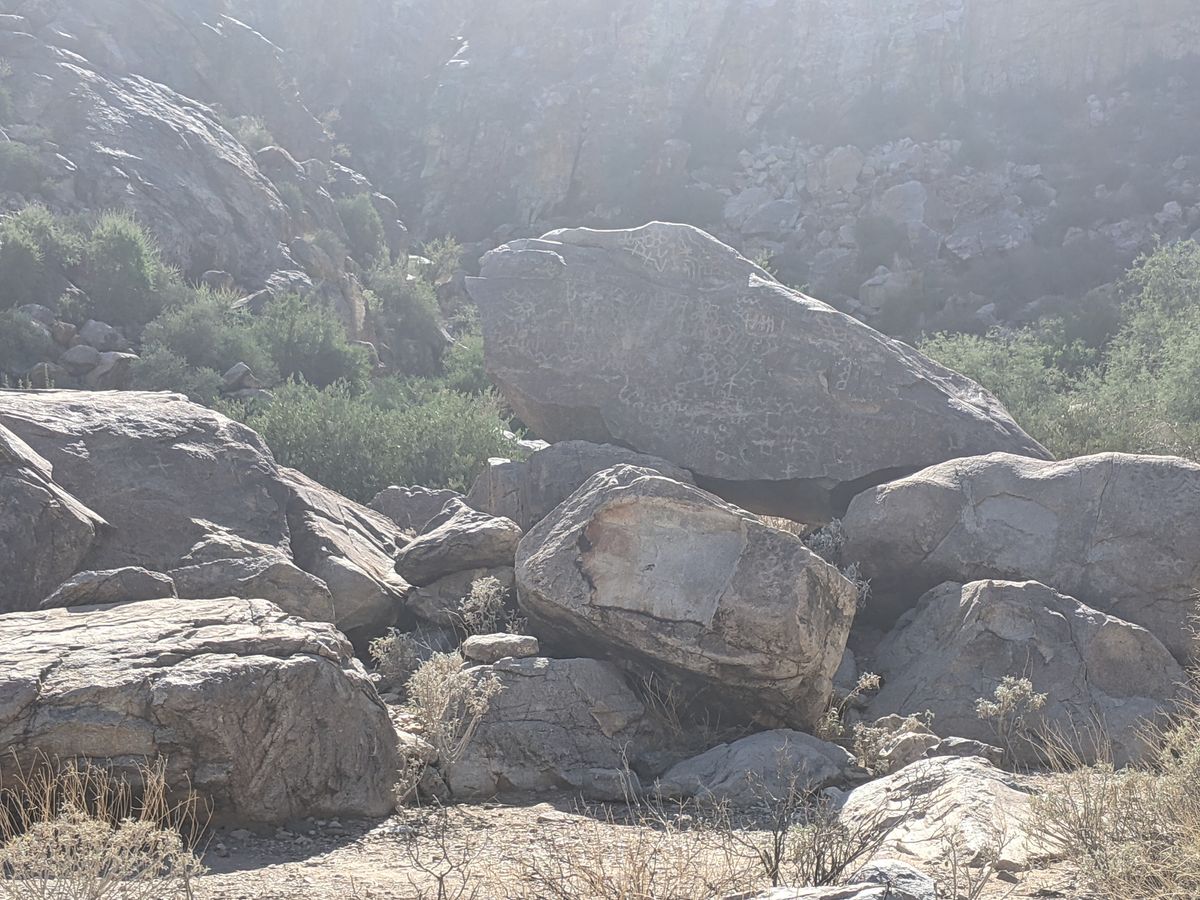
White Tank Mountains Petroglyphs
These petroglyphs created by ancient Arizonians have withstood centuries of exposure to the elements.
About
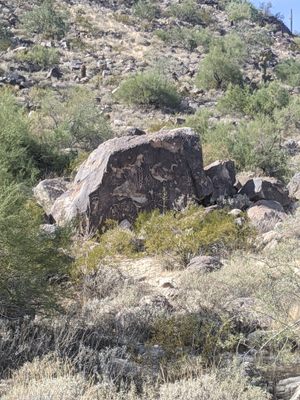
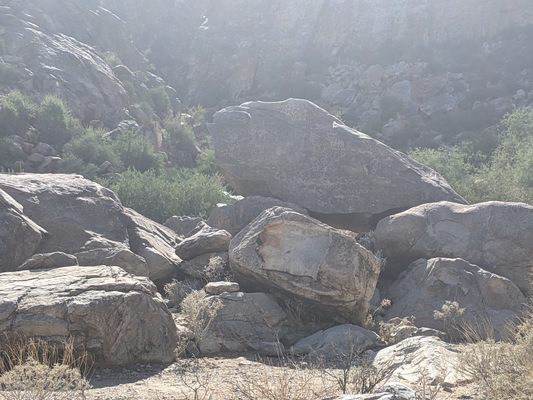
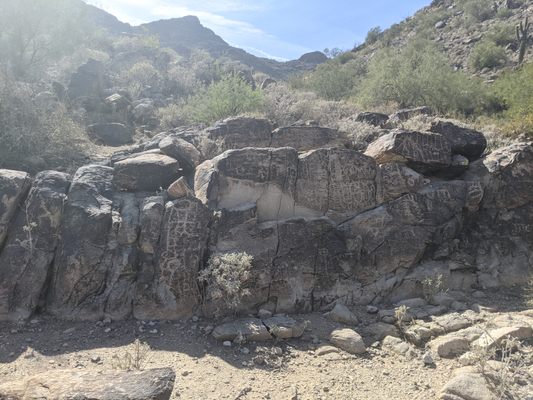
Through the winding Waterfall Canyon Trail, a few drawings stand out along the rocks. These drawings were left by nomadic people from around 500-1100CE, many of which are attributed to the Hohokam people who used water management techniques to farm and occupy permanent settlements in the White Tank Mountains.
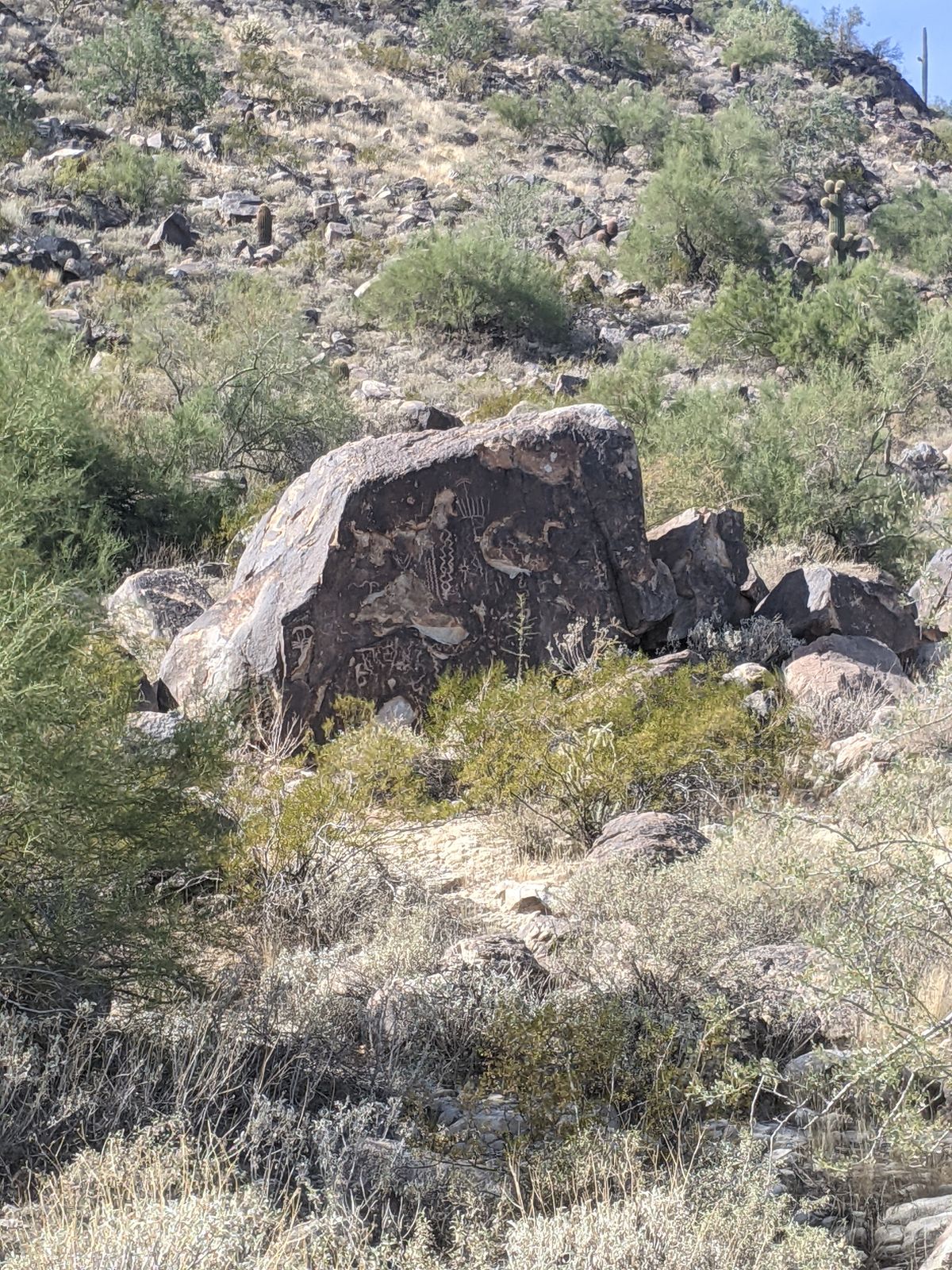
These drawings are carved into the "desert varnish" that surrounds the rocks of this region. Desert varnish is a film of patina produced by a combination of airborne clay, dirt, and microorganisms that accumulate on the surface of rocks over hundreds of years.
Using a handheld rock, the desert varnish can be chipped away to reveal the lighter rock underneath, which is how the petroglyphs were made. Since they were created by different peoples across the span of hundreds, if not thousands, of years, some are easily viewable, while others can only be seen from an angle as uncolored indentations on the rock.
No one knows for sure what purpose the petroglyphs served, but common theories suggest they were used as trail-markers, recordings of events, and representations of religious concepts.
Get more unusual and extraordinary places each week with the Atlas Obscura Places newsletter.
Your newsletter subscriptions with us are subject to Atlas Obscura's Privacy Policy and Terms of Use .
Gallery