"Xu Wei Ji": Talking about Rabbit
Zhang Zhaohong There is an idiom called "puzzling", which originally means that when the rabbit's ears are lifted, the male rabbit will flutter non-stop, the female rabbit will close her eyes, and it is difficult to tell the male and female when running on the ground...
Zhang Zhaohong
Later, he described things as complicated and difficult to see the truth clearly.
This idiom comes from the sentence at the end of "Mulan Poetry": "The male rabbit's feet are twitching, the female rabbit's eyes are blurred, the two rabbits are walking next to each other, how can they tell whether I am male or female?"
"Mulan Poetry" is a Yuefu poem from the Southern and Northern Dynasties of China. Mulan learned to ride from a young age, and she became more refined as time went by. It was time for the Khan to order troops, because his father's name was in the military book, and his old father was ill and could not walk. Mulan disguises herself as a man and joins the army in place of her father. He traveled up the Yellow River, crossed the Black Mountains, and fought for twelve years, accomplishing many extraordinary feats.
Mulan's joining the army reflects Mulan's heroic spirit of defending her family and country, and her feelings as a daughter who respects her father.
After twelve years in the army, why can’t my fellow soldiers distinguish whether Mulan is male or female? It's a bit puzzling indeed. The author found some other information, saying that after Mulan joined the army, she worked as a messenger (a person who delivered military information and official documents in ancient times). She traveled alone, only resting and changing horses at the inn along the way, and had a room for separate use, so it was difficult for outsiders to tell the truth about Mulan's "male and female".
The male and female gender of rabbits is also difficult to identify when they are young. There are 42 species in 9 genera of the Leporidae family. They are herbivorous animals that move at night. They have long tubular ears, short tufted tails, two short forelimbs, and long and powerful hind limbs.
As early as 60 million years ago, there was a creature called the Climbing Archeopteryx, which later evolved into the Archeorabbit; about 30 million years ago, the Archeorabbit evolved into a hare, and it was not until 3,000 years ago that wild rabbits were gradually domesticated into domestic rabbits.
There are still dozens of subspecies of hares around the world. They are adapted to a variety of environments and have a wide range of food habits, including various weeds, plant seeds and fruits, as well as tree branches, leaves and tender bark. Rabbits love to eat the young leaves of plants, but this does not include carrots. Because carrots are a crop grown by humans, there are not many opportunities for wild rabbits to eat them in the wild. In addition, carrots are high in sugar and are not suitable for the digestive system of domestic rabbits.
Why do rabbits have "three-petal mouths", "red eyes" and "windy ears"?
Rabbits have well-developed incisors, which help them eat various grasses, grass roots and tree bark. The three-petal mouth is most conducive to turning the incisors out for use in a timely and unobstructed manner.
The "red eyes" of rabbits are not universal. Usually most white rabbits have red eyes, but there are also black, blue, gray, and more. Rabbits with red eyes are adorable. From an evolutionary perspective, the color of rabbit eyes is generated based on changes in the living environment and is hereditary.
Rabbits have "wind ears" and are very sensitive to sound. These ears are like their own "radar", and the dense hair in the ears is like an antenna. As long as the two ears are raised high and turned slightly, the small sounds dozens of meters away will be sensitively received by rabbits, so that they can detect danger in time and escape.
Rabbits are cautious and timid by nature. They will droop their ears and stick them against the nape of their necks only when they are resting. Some people say that to catch rabbits, you have to scratch their ears. In fact, when you grab their ears, rabbits will stop struggling, maybe hoping that their "radar" will not be destroyed.
Hare likes to dig holes, but they don’t like to stay in the holes for a long time, so they use borrowed holes to escape. When being chased by natural enemies, hares usually do not run blindly. They have figured out the terrain in their daily activities. Even if they did not dig it themselves, they have been "familiar" with it in advance, and even "familiar" with it again from time to time. Therefore, when being chased by enemies, hares can usually escape into nearby burrows quickly and accurately.
The idiom "Three burrows of a cunning rabbit" first came from "Warring States Policy·Qi Ce IV", and is now often used to describe hidden places or methods. In traditional Chinese culture, there are "six beasts" in addition to the "six domestic animals". Rabbits are one of the "six beasts" and are the main targets for people to hunt. There are three poems in the Book of Songs related to hares. "Gourd Leaves" says: "Fan banners and gourd leaves are used to gather them. A gentleman has wine, so he tastes it. If there is a rabbit head, he can burn it with a cannon..." It describes the happy scene of hunters hunting hares and using them for drinking.
The ancestors of domestic rabbits are not hares, but wild cave rabbits. The cave rabbit is native to Europe, and some came to China via the "Silk Road". Young wild rabbits in China are prone to rickets and cannot reproduce. It can be said that all domestic rabbits around the world were domesticated from cave rabbits.
In English, domestic rabbits are called Rabbit, and wild rabbits are called Hare. The newborn cubs of cave rabbits are smooth and hairless because they like to stay in holes. However, the newborn cubs of hare are furry. They mostly move around on the surface and will run around soon after they are born.
There are many endangered species of rabbits, due to habitat loss and hunting, as well as ongoing wildfires, overgrazing, deforestation and other factors that damage the environment.
The author believes that rabbits are weak targets for humans and animals, and are one of the lowest animals in the animal food chain. They do not have the ability to retaliate and can only escape by running as hard as they can, and use their efforts to reproduce to prevent the extinction of the species. Rabbits are a species that are dedicated to maintaining the ecological balance of nature.
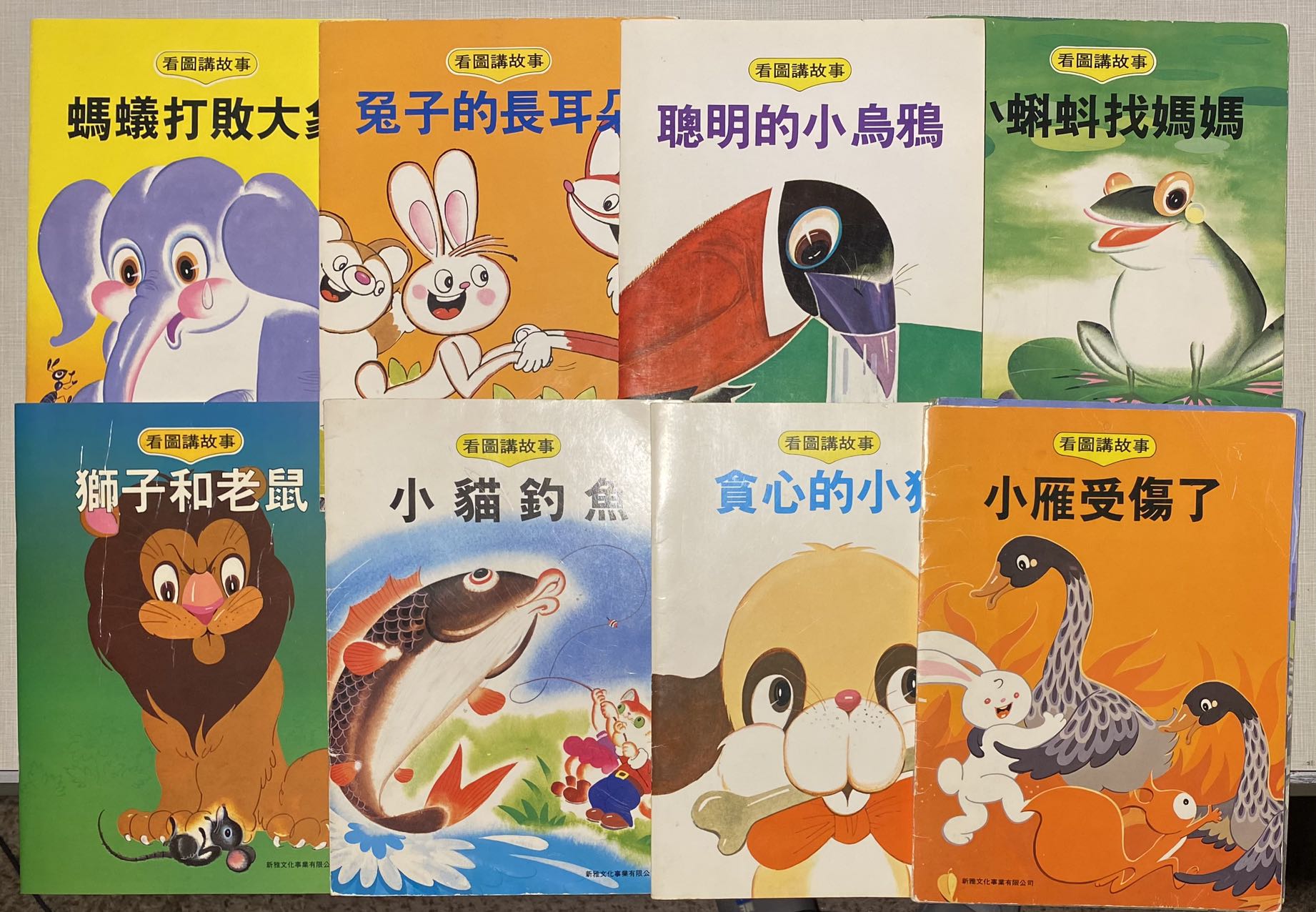
When our daughter Xia Wei was young, we bought a lot of "Look at Pictures and Tell Stories" books with audio tapes and played them to her. Her favorite since she was a child was the little white rabbit.
When she grew up, she often went to the rabbit house as a volunteer, and many of the furnishings in her home contained art pieces about rabbits.
Xu Wei also wore clothes with rabbit patterns on her body. She cultivated love and love for small animals in the children, and asked them to take good care of the disabled rabbits.
Wang Jian, a poet of the Tang Dynasty, wrote a poem about a little white rabbit: "The white rabbit in the new autumn is bigger than a fist, and its red ears and frosty fur sleep in the grass. The emperor does not teach people to shoot, but the jade whip covers the horse's hooves." This poem praises the cuteness of the young rabbit's "sleeping state" and advises people not to hurt rabbits at will.
January 25, 2024
Sources and usage
This piece is republished or synchronized with permission and keeps a link back to the original source.