Pearl of the Desert | Information about Chinese Americans in Arizona in "A Handbook of Letters to All Countries"
Zhang Zhaohong A Handbook of Letters to All Nations...
Zhang Zhaohong
A Handbook of Letters to All Nations Editor and Prime Minister: Gold
At the beginning of the 20th century, postal services between the five continents were transported by ship. An overseas Chinese from Xingning, Guangdong, named Huang Jin, was responsible for delivering Chinese letters at the San Francisco Post Office. Year after year, due to the inability of people in my hometown to read "foreign languages" and the lack of geographical knowledge, a large number of letters sent to the United States from various countries are declared "undeliverable." So he edited this 1,500-page "Common Notes on Letters from All Nations".
The author found that from pages 1390 to 1393 of the book, there are records of "undeliverable" Chinese letters from the "Arizona Province" (Arizona) in the United States in 1913. Among them are Information on the names and addresses of grocery stores, laundries and restaurants, including 13 in Phoenix and as many as 58 in Tucson, as well as information on Chinese shops in other towns.
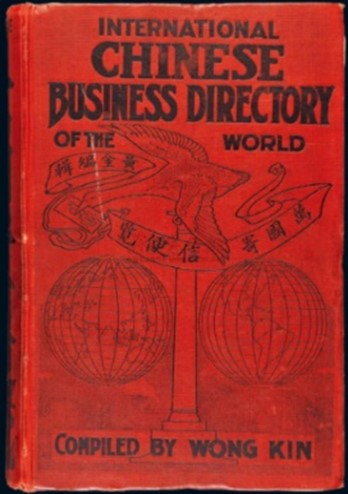
The cover of the 1913 edition of "Letter of Letters from All Nations" is a hard cover of red oilcloth, and the title of the book is gilded. Due to long-term reading and use, the cover is worn and the color has fallen off. This book is edited and published by Wanguo Letter Publishing House. The editor-in-chief is Jin Jin, an overseas Chinese living in the United States in Xinning, Guangdong. Huang Jin felt that "today's traffic between China and foreign countries, mutual trade between China and foreign countries, and reading the world map are like this.... However, the Ministry of Foreign Affairs and Trade did not have a survey form at any time to comfort the public, and even if they had officials nearby, they could only compile it in one corner." Overseas Chinese businessmen were also unable to unite their efforts due to inconvenient exchange of information. They were even suppressed by Western trading companies in the international business war, and the stubborn domestic forces ignored the obstacles, so they independently collected overseas companies and firms to compile this volume.
Why did Huang Huang edit this "Common Notes on Letters from All Nations"? As a clerk delivering Chinese letters at the San Francisco Post Office, he saw day after day that whether family letters or business letters could not be delivered due to unknown addresses. So we decided to collect the addresses of Chinese businesses around the world into a book to solve the problem of Chinese people not being able to write international mail envelopes. (In that era, many people mailed letters to nearby businesses, and the merchants notified the recipients.) However, a major earthquake in San Francisco on April 18, 1906 destroyed all the data collected by Jin Jin and others in the past few years
. After the earthquake, data collection resumed. Finally, in February 1913, the "Notes on Sending Letters to All Nations" was published. Gold said the book "took a lot of their time and energy."
"A Guide to Sending Letters from All Countries" covers dozens of countries and regions around the world. It can be said to be a vast overview of a huge international business network. It is a first-hand material for studying the development of China's international transportation, postal service, and China's international business network in the early Republic of China. It has important historical value. This is a rare work with important research value. This book was donated to the China Overseas Chinese History Museum in September 2006 by Yu Hua, an American overseas Chinese.
In 1900, three famous restaurants in Phoenix were run by Chinese, but the information was recorded in English articles. At that time, Chinese letters sent from China to cities and towns in Arizona could not be forwarded to stores or individuals in the Arizona Territory because the address written by the sender on the envelope was unknown or had errors. At the beginning of the 20th century, China was undergoing a dynasty change. The Qing government collapsed and warlords fought. There is a saying: "A letter from home is worth ten thousand dollars when the wind and fire last for three months." However, letters sent thousands of miles away often fail to reach the hands of relatives on the other side of the ocean. Fortunately, there is such a caring person who collects these letters one by one and compiles them into a book, so that we can still see the information of these shops at that time today. This is the earliest Chinese record of Chinese people in Alberta.
>Chinese store information in “phoenix”, Alberta (partial) Chinese store information in “Tucson” and other towns
Sources and usage
This piece is republished or synchronized with permission and keeps a link back to the original source.