Desert Pearl | The fourth-ranked city in Chinese history in Arizona, United States (twenty-five): Chandler
Arizona Chinese Historical Association: Zhang Zhaohong In 1891, Alexander John Chand...
Arizona Chinese Historical Association: Zhang Zhaohong
In 1891, Alexander John Chandler, purchased 80 acres of land south of Mesa from the federal government. He used the new science of irrigation engineering to build early canal systems in the arid desert.
By the turn of the century, Dr. Chandler owned an 18,000-acre ranch. He sells online at Ranches Nationwide. In 1912, Chandler opened town offices. On the Eastern Arizona Railroad, an excursion train brought 300 speculators who spent $50,000 buying land. The covenant requires the landowner to build a house on the land within a year.
One year later, Chandler looks like a mature town. Businesses and banks were built, as well as an Eastern Railway station. Smooth dirt roads surround the grassy park. Horse-drawn carriages and Fords moved busily through the town.
The San Marcos Hotel opened in 1913. Among the 500 guests were governors and the Vice President of the United States. At that time, cotton, grain and alfalfa were the main crops in Chandler, and cattle, sheep and ostriches were raised. Long-staple cotton is used to produce rubber tires and aircraft fabric, and ostrich feathers are used to decorate popular women's fashion.
By 1920, Chandler had more than 1,000 residents. Citizens voted to incorporate and become the Town of Chandler. For most residents of Chandler, the Great Depression was not a devastating experience. The cotton crash of 1920 had a far greater impact on the economy. However, Dr. Chandler's bank also failed at this time.
In 1941, the U.S. Army Air Force planned to build a fighter pilot training base east of Chandler. Two months later, Japanese bombers attacked Pearl Harbor. During World War II, Chandler's population doubled, reaching 3,800 by 1950. Chandler was upgraded from a town to a city in 1954.
Chandler's population has surged in recent years, with the 2020 census exceeding 265,000 people. Among them, Asians account for 7.9%, while the Asian population in the state only accounts for about 3% of the total population. The Chinese population is also increasing. Chandler's economy has diversified. While agriculture remains a vital element, it now has strong manufacturing and electronics industries.
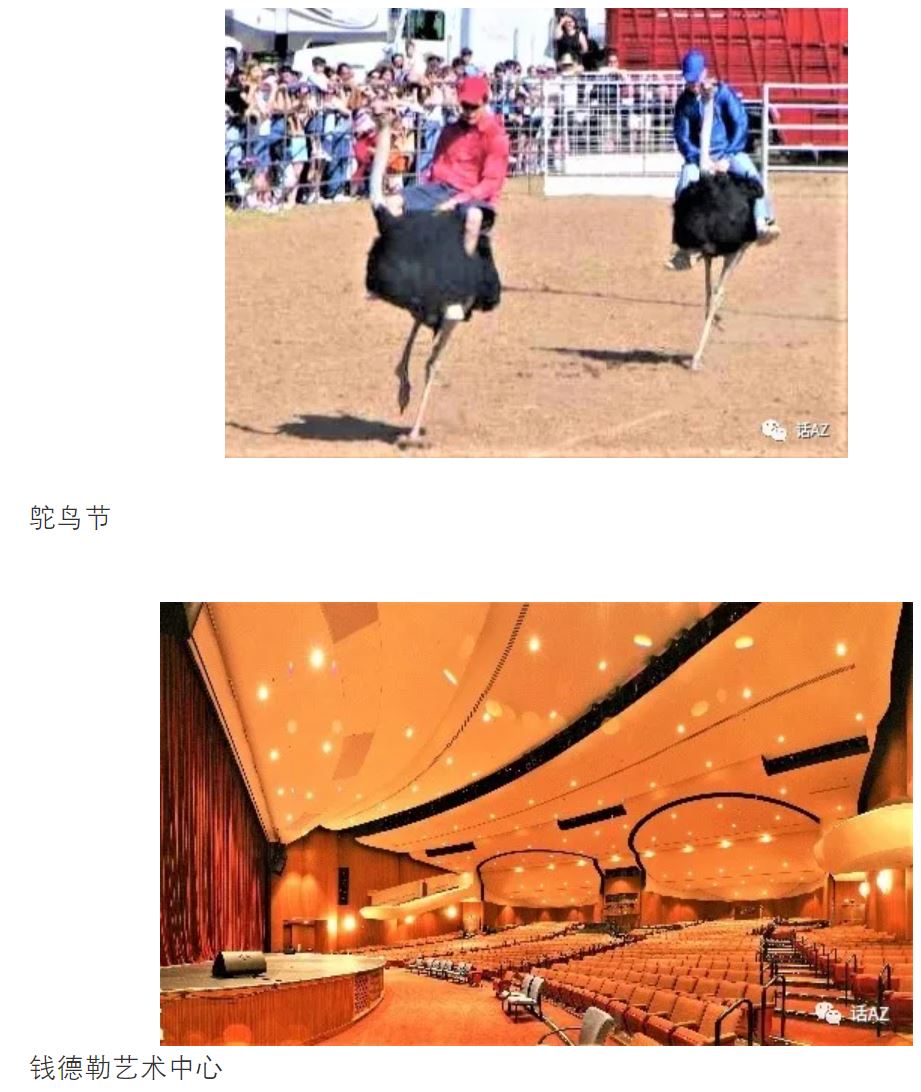
The city of Chandler is named after Dr. Chandler. Its arts centre, new parks, restaurants and world-class golf facilities signal an exciting future for the city. The Ostrich Festival and other annual events make Chandler a popular attraction for visitors from across the country. These include the award-winning Chandler City Hall and Chandler Center for the Arts, a world-class facility.
The collected Chinese information shows that in the 1960s, Chandler had Chinese-owned stores, including Kim Wong’s grocery store “KIM’S MARKET”; Gene C. Gin’s grocery store “PAYLESS MARKET” and Donald Wong’s grocery store “DON’S MARKET”.
Sixty years ago, there was only one Chinese restaurant in Chandler: "PEACOCK RESTAURANT", owned by Kim S. Yee, located at 131 S. Arizona Ave. The author once inspected it on the spot and found that it is now a chain branch of a Mexican restaurant.
There is a Railway Museum in Chandler, which collects various steam locomotives and various equipment. These trains on the Southern Pacific Railway in the 20th century once rode on the railway built by Chinese laborers a hundred years ago. The contribution of the Chinese to the United States is indispensable!
>Sam Huang is a PhD student in Comparative Education at the State University of New York. He and his family have lived in Chandler since 2007. He served as principal of Career Success High School in Mesa. Huang Xinmin actively participated in politics and continued to work hard despite being unfavorable in the first two elections. He was finally elected as a Chandler City Councilor in 2017. As a representative of diverse ethnic groups, he balanced the power in the government.
While in office, Councilor Wong was a member of the Chandler Community Partnership. He has made significant contributions by serving on the Administrative Services, Communications and Public Affairs, and Management Services Subcommittees. He served as vice chair of the 2020 Census Complete Count Committee and became a member of the Arizona League of Cities and Towns' TIPW (Transportation, Infrastructure and Public Works) Committee, and he is a member of Chandler's Museum Advisory Board.
Over the years, governments in various cities have appointed ethnic minorities to assist in government work, including Chinese. In 2021, Chandler Mayor Kevin Hartke appointed Garry Ong, an overseas Chinese leader in Alberta and chairman of the Alberta Chinese Restaurant Association, as the Asian Commissioner of the Chandler City Human Relations Commissioner. The Human Relations Committee is composed of representatives from multiple ethnic groups. It is responsible for liaison and communication between ethnic groups, and reflects the collected opinions and suggestions to city government departments in order to achieve social harmony and ethnic unity. Deng Chaoju is the only Asian commissioner representative.
Sources and usage
This piece is republished or synchronized with permission and keeps a link back to the original source.