Pearl in the Desert | History of Chinese in Arizona, USA (19) The last Chinese shop on the site of Chinatown (continued)
Arizona Chinese Historical Association: Zhang Zhaohong In 1970, Deng Shangwu bought the business of a Chinese store located on the site of Phoenix's "Chinatown" and used "P...
Arizona Chinese Historical Association: Zhang Zhaohong
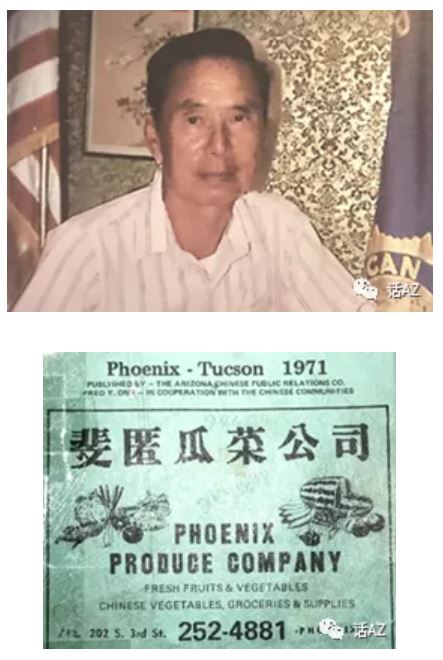
In 1970, Deng Shangwu bought the business of a Chinese store located on the site of Phoenix's "Chinatown" and registered it with the Arizona government under the name "PHOENIX PRODUCE COMPANY" to establish the "Phoenix Produce Company".
collected an advertisement from 1971, which had the words: "Fei Ni Melon and Vegetable Company" in large characters, and also wrote: "This number issues seasonal fruits, Tang Dynasty porcelain, and imported food. It is supplied to various restaurants and homes. Overseas Chinese are welcome to patronize! Shang Wu. Tel: 252-4881." Since then, the phone number of this shop has been remembered by the majority of Chinese people. Until today, fifty years later, this phone number has not changed and can still be reached! In Arizona's Chinese community, this is a unique business phone number.
Deng Shangwu was very smart. When he took over the store, the business was not good, so he printed an advertisement and asked the Mexican Sui family to deliver it. When doing business, you must be trustworthy and the goods must be genuine. Due to the fresh supply of goods, fair prices, and good reputation, everyone has a good reputation for Deng Shangwu, and "go to Awu to buy goods" has become a idiom among the local Chinese. Due to the prosperous business of the "Phinnigua Vegetable Company", he soon bought an adjacent property.
In 1990, the government wanted to expropriate the buildings in that area and demolish them to build a stadium and building complex. He received 600,000 yuan in relocation compensation from the government. So, he bought the historical building built in 1927 two blocks away from the old store. He invested a total of half a million, renovated the interior and added equipment, while the company's name and phone number remained unchanged. A new and beautifully decorated store that still belongs to the ruins of Chinatown continues a new chapter in Chinese history.
Many changes in life are forced by the environment. The fresh noodles originally sold were shipped wholesale from Los Angeles. However, due to the death of the owner of the noodle factory, there was a shortage, so Deng Shangwu had to make the noodles himself. He imported noodle production machines from Taiwan, learned how to prepare flour, mix it, and press the finished product, and mastered the best methods through continuous practice. From then on, people were very willing to buy Awu's noodles, and the company also delivered to more than 40 Chinese restaurants. To this day, Chinese people still come to make reservations, and the fresh noodles have become a brand of the store.
In order to expand new sources of goods, the flexible Deng Shangwu also imported electric bicycles (E-bikes) from China at wholesale prices, guaranteeing them to be sold at the lowest price in the state and providing maintenance services. Deng Shangwu studied hard in his youth and had a solid foundation in repairing motorcycles and electrical appliances. He imported relevant parts from China and repaired and replaced batteries himself. Because of its complete after-sales service, thousands of E-bikes of different models have been sold before and after.
Deng Shangwu worked hard throughout his life, was perseverant and responsible, and took action when it was time to protect his own rights and interests. He doesn't smoke or drink, and he doesn't do anything to deceive the world and steal his reputation. He is trustworthy, unyielding in the face of difficulties, and calm and confident are his personality and the factors that lead to his success. Due to the changes in the city, surrounding residents have moved away and find it difficult to visit. In recent years, the store has shrunk a lot, and the business has been greatly affected.
From 1970 to 2021, Deng Shangwu has been operating here for more than half a century, but at the age of 87, he is still working. For some reasons, his store did not apply to be listed on the National Register of Historic Properties. Currently, he and his daughter Jenny are guarding this nearly century-old building, continuing the last legend of Chinese shops on the site of Phoenix's "Chinatown".
Sources and usage
This piece is republished or synchronized with permission and keeps a link back to the original source.