>Pearl of the Desert | History of Chinese in Arizona, USA (6)
Arizona Historical Association: Zhang Zhaohong Chinese labor and American railroads mutually inherited each other. In 1879, the Southern Pacific Railway was opened to Maricopa...
Arizona Historical Association: Zhang Zhaohong
Chinese labor and American railroads inherited each other
> In 1879, the Southern Pacific Railroad was opened to Maricopa, but not to Phoenix. The same goes for the Atlantic-Pacific Railway to the north, which did not go to Prescott, the capital of Arizona at the time.
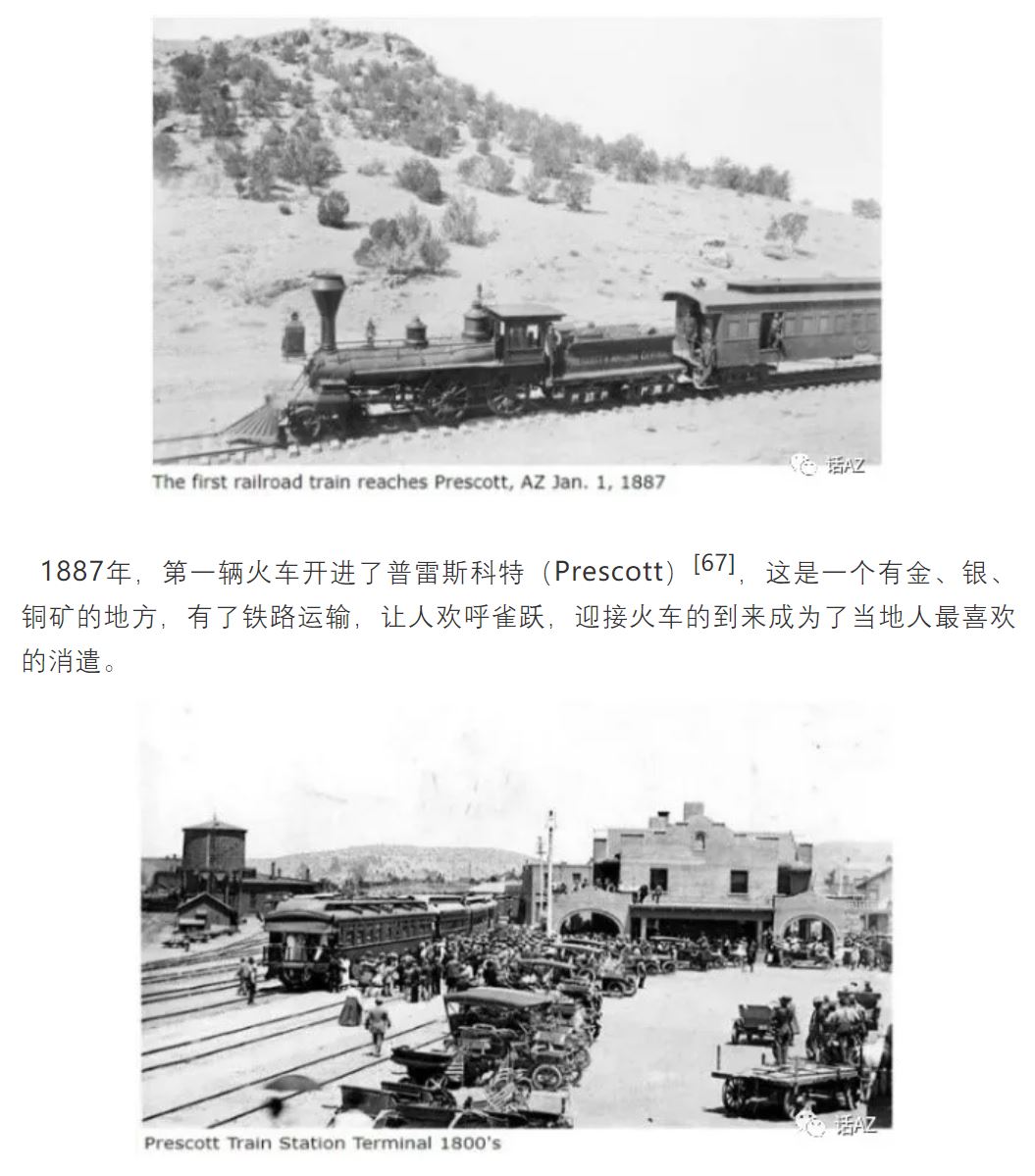
In order to build public railways in Arizona, different railway operating companies have combined many times to build a north-south railway (SFP&P) between two east-west interstate railways, and built multiple other railway branch lines, connecting many mining fields and logging companies, as well as towns within and outside the state, which greatly promoted the economic development of the Arizona region. [66]
When the Southern Pacific Railroad reached Arizona, Phoenix residents began clamoring for a railroad. Although thousands of miles of track were being laid across the country each year, seven railroad companies that had organized to build the line went bankrupt in the decade before the line from Maricopa to Phoenix was built. [68]
Building this railway was fraught with difficulties, as the weather was extremely hot and the hot summer sun made the rails too hot to carry. The workers donned heavy deerskin gloves and worked slowly. A dispute ensued between the Pima Indians, who owned part of the right-of-way, and the railroad, and negotiations lasted about six weeks before a settlement was reached. On November 1, 1886, the Maricopa and Phoenix Railroad was chartered and work resumed. The railroad bridge over the Gila and Salt Rivers was constructed in San Francisco and shipped to the site for final assembly. [69]
It is rumored that the railway will arrive in Phoenix on June 1. Railway stations have been built in Tempe and Phoenix, and the slopes of the hills on both sides of the railway have been cut at the southern end of Papago Buttes. A sense of excitement has swept through the town as real estate developers are eager to cash in on the boom.
In June 1887, a new locomotive with the word "Phoenix" painted on the side rolled into Tempe. But because of the strike, no one came to work at the railroad, so new workers had to be hired. It was not until July 3 that the last track was "laid and secured."
On July 4, 1887, the Fourth of July, the train finally arrived in Phoenix. [70]
>The development of towns near Phoenix was more due to the Southern Pacific Railroad (SP). The SP rail branch, which runs south from Tempe to Kyrene, is the first direct rail line to Phoenix. The Phoenix-Tempe railroad branches east from the M&T and then to Mesa, both railroads becoming part of the SP. The Chandler Railroad was also on the SP's Northern Main Line.
Phoenix Union Station was built in 1923. It is the place where multiple railway branches meet. Historically, at its peak rail travel had as many as 18 train services per day. Phoenix Union Station closed in 1996 and is listed on the National Register of Historic Places. [69] Amtrak has a total of eight train stations in different places in Arizona. [71]
In order to commemorate the construction of American railroads and protect important railroad heritage, the city of Chandler, Arizona, established a railroad museum. (Address: 330 E Ryan Rd, Chandler, AZ), the museum exhibits the history and culture of the American Southwest and Arizona Railroads, and collects early retired trains, many of which have historical value and are over a century old. Please bring your children to visit and tell them about the great contributions made by the Chinese in building railroads, so that the next generation can learn more about the history of Chinese labor and the United States.
On February 25, 2020, the Arizona Chinese Historical Association and the Gilbert City Historical Museum jointly held a lecture on "The Contribution of Chinese Workers to American Railways". Led by Arizona Chinese Historical Association directors Yang Ping and Dr. Qian Xiaowu, attendees discussed how Chinese immigrants helped build the railroads that led to the development of the United States. Discussion also included the history of the Gilbert Railroad, the history of the Chinese immigrants who settled here, and the expanding Chinese influence on the community.
When completing the description of the second chapter of this article "Two Cross-State Railways", we concluded with "The Chinese built the railways, and the railways highlighted the Chinese". This summary objectively illustrates the mutual inheritance relationship between the Chinese and American railroads: the Chinese used their blood, sweat and lives to participate in the construction of the railroad network that made a huge contribution to the United States. The Chinese also followed the railroads into the towns along the lines, and "Chinatowns" were formed in places where the Chinese lived together. The Chinese multiplied and developed in these places, and continued to exert their own strength for the future prosperity of American society, and also brought the earliest foundation for the subsequent growth of the Chinese community.
Photos from the Internet, reference:
66, https://en.wikipedia.org/wiki/Santa_Fe,_Prescott_and_Phoenix_Railway
67, Arizona Chinese History 6 http://www.sinovision.net/home/space/do/blog/uid/512889/id/323364.html
68,69, https://parentseyes.arizona.edu/node/376https://phoenix.org/phoenix-history-1887-railroad
70 https://en.m.wikipedia.org/wiki/Union_Station_(Phoenix,_Arizona),
71https://amtrakguide.com/stations/amtrak-stations-in-arizona
Sources and usage
This piece is republished or synchronized with permission and keeps a link back to the original source.