Desert Pearl | Chinese History of Arizona, United States (3)
Arizona Historical Association: Zhang Zhaohong Chinese in Tombstone In 1886, a fire in the central silver mine led to the decline of Tombstone, causing the town's population to rapidly...
Arizona Historical Association: Zhang Zhaohong
Chinese in Tombstone
In 1886, a fire in the Central Silver Mine led to the decline of Tombstone, causing the town's population to drop rapidly, and Tombstone almost became a "ghost town."
Fifty years later, the already dormant "ghost town" shines again! Tombstone became a tourist destination in the American West.
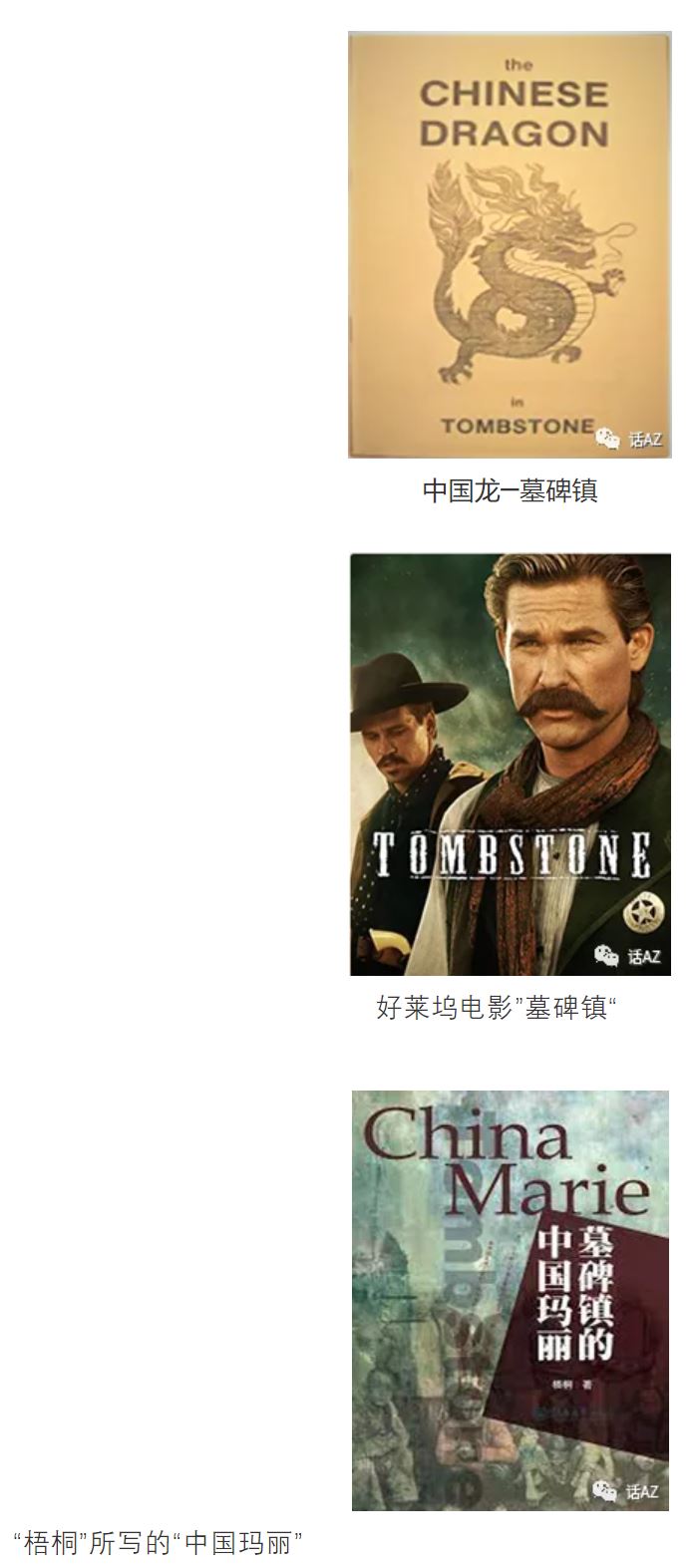
These changes all started with Ben T. Traywick, the town’s historical author emeritus. The book he wrote, "THE CHINESE DRAGON IN TOMBSTONE", was published in 1989. [52] The TV series The Life and Legend of Wyatt Earp popularized the image of the legendary "Dragon Lady" (China Mary) ruling Tombstone's Chinatown. The gunfight case in "Town too Tough to Die" was also made into the Hollywood movie "Tombstone".
After that, a Chinese student wrote a chapter novel "Chinese Mary of Tombstone Town" under the pen name "Wu Tong", which includes: "Along met the God of Death on his way to escape, and Asan crossed the road to help his friend. Mary was so heroic that she was ready to live and die, and corpses were occasionally seen in the abandoned cave of the King of the World" and other chapters, which are rich in literary color. The novel quickly became a best-seller, especially in the Chinese world. These legendary stories were spread by newspapers, television, and the Internet and became "Internet celebrities."
According to World Celebrity News: Jinan University Press published the novel of the same name "Chinese Mary of Tombstone" by the author "Wu Tong" in 2015, and adapted the movie script "Chinese Mary" (English title "Too Tough To Die"), which was shortlisted for the American Feature Film Screenplay Award at the Houston International Film Festival, and competed for the Remy Award.
The American "World Weekly" once published an article saying that it was exactly one hundred years since the death of "Chinese Mary" on December 6, 2006. When any Chinese travels to Tombstone, Arizona, please don't forget to stop by Boots Mountain Cemetery to say hello and pay your respects to this strange Chinese woman. "
Driven by various literary atmospheres and commercial interests, "China Mary" She became famous all over the world and became the most glorious and representative Chinese woman in the history of Chinese Americans in Arizona!
The story of Tombstone comes from the oral history Traywick heard from the older generation, so there are many versions that the author is citing. Trimble's article:
"In the 1880s, there were approximately 500 Chinese in Tombstone. The most famous is a woman named Sing Choy, who went by the name "ChinaMary". Chinese people often adopt white names, such as Mary or John. She was a shrewd businesswoman who became the absolute ruler of the Chinese community. She ran a store and controlled opium dens and gambling, and found work for Chinese laborers in white neighborhoods. She guarantees their reliability and honesty. Her guarantee was "They stole it, I paid it." She took their wages and always got a "commission." She controls the town's "red light district" and the opium trade. Despite the problems with her business, Mary remains respected and well-liked among the residents of Tombstone.
"China Mary" is married to "Ah Lum", a co-partner of the famous "Can Can Restaurant". She usually wears brocaded silks and lots of Asian jade jewelry. She is also very influential among whites and people of other ethnicities. Her words are the same as those of a judge or a banker. The whites preferred Chinese for domestic work, and Mary was resourceful in finding the best workers. She guarantees their honesty and workmanship. Her guarantee was "They stole it, I paid for it!" All work was done to the employer's satisfaction or it would be redone for free. However, the payment was made to "China Mary" and not to the employees. She always made sure she got her commission.
"China Mary" operates a well-stocked grocery store where American and Chinese goods are sold. Both whites and Asians were allowed to gamble in the back of her shop, but they had to abide by her rules. Mary also seems to be a savvy investor. She was involved in many businesses, including several laundromats and a restaurant owned by Sam Sing. Mary was also a moneylender and used her own judgment to determine the creditworthiness of borrowers. Mary of China is also remembered as a generous lady who helped those who were sick, injured or hungry. She once helped a cowboy with a broken leg and paid for his medical bills.
"China Mary" died of heart failure in 1906, and there were many people in the town who served her. She is buried in Booth Hill Grave Yard. "[53]
Trimble mentioned that the English name of "Chinese Mary" is Sing Choy (the author pronounces it in Cantonese as "Splendid") is something that Traywick does not have in the book "Chinese Dragon - Tombstone". Trimble also did not deliberately promote the legend of "China Mary" and the glorious burial after her death in Traywick's original work. He only briefly mentioned that she was buried in the "Shoe Mountain" cemetery near Tombstone.
In the cowboy culture full of wildness and masculinity. , there is a Chinese woman, and she is also a business-minded, kind-hearted and respected person. From a practical point of view, the "Chinese Mary" in Tombstone, Arizona, has become a fixed role model like the Chinese historical figures in some places.
However, there is no truth in the matter. There is no private file of "Chinese Mary" in the town hall of Tombstone. "Chinese Mary" is indeed a person, but it is much more fleshed out with a strong literary flavor. Traywick's "Chinese Mary" is an oral history, and the older generation of Westerners in Tombstone are unlikely to describe these detailed Chinese folk customs. The author found that "Traywick went to China after World War II and did not leave Qingdao until the last ship. " [54] Therefore, when writing the story of "Chinese Mary", he may add some Chinese elements and colors that he himself knows.
Dr. Yang Li of the Arizona Chinese Historical Association debunked the myth of "Chinese Mary" in one of her speeches. (To be continued)
(Photo from the Internet) References:
52 https://www.amazon.com/Chinese-Dragon-Tombstone-Ben-Traywick/dp/B00N45TGB2
53 https://truewestmagazine.com/china-mary/
54 About Ben T. Traywick
Sources and usage
This piece is republished or synchronized with permission and keeps a link back to the original source.