Zhang Zhaohong: Journey to Costa Rica (Part 4)
Zhang Zhaohong: Journey to Costa Rica (Part 4) Photography/Written by: Zhang Zhaohong 4. Doka Coffee Estate (Doka Estate) Costa...
Photography/Written by: Zhang Zhaohong
4. Doka Coffee Estate (Doka Estate)
Costa Rica is one of the major coffee producing areas in the world. The coffee produced has a light and pure flavor and a pleasant aroma. Its coffee has an excellent flavor, is smooth, highly acidic, high-grade, and has an attractive aroma. The world-class coffee shop "Starbucks" uses a large amount of Colombian coffee beans.
Costa Rica is divided into two seasons a year: the rainy season from April to December, and the dry season from the end of December to April. In the capital, San Jose, the average annual temperature is 15 degrees Celsius to 26 degrees Celsius. But no matter how bright the sun is, there is always a comfortable cool breeze blowing, and there is often a light rain after noon. This unique climate and the fertile volcanic soil of the central basin allow Costa Rica to produce abundant coffee. Coffee was actually introduced to Costa Rica from Cuba. Fortunately, there is a unique geography suitable for coffee growth. In addition, there are also hard-working farmers. Their passion and experience passed down from generation to generation are just to present a perfect cup of coffee...
Costa Rica has a population of only 3.5 million, but has as many as 400 million coffee trees. Coffee exports account for 25% of the country's total exports. Since coffee was first planted in Costa Rica in 1843, coffee has become Costa Rica's "golden bean". It has completely changed this small, originally poor and backward colonial country. After Costa Rica became independent, it enacted laws that allowed ordinary citizens to grow coffee, laying the foundation for a society dominated by the middle class and making Costa Rica unique among Latin American countries. The money earned from coffee was heavily invested in infrastructure, including roads, railways, schools, and theaters. The middle class has sent their children to study abroad, and the new generation of new immigrants who have returned from their studies and have various skills and modern ideas have also injected new blood into the country, helping Colombia eventually move towards democracy.
The coffee estate we visited is called "Doka Estate". It is located on a hillside at an altitude of 1,500 meters, which is most suitable for coffee cultivation. The acidic volcanic soil deposited by the nearby Poas Volcano's eruptions for many years, the fresh and pure mountain air, and the abundant sunshine provide abundant nutrients for the coffee trees, creating an excellent environment for coffee growth. This is not only because higher altitudes increase the acidity of the coffee beans, which increases the flavor, but also because the low temperatures at night slow down the growth of trees, making the coffee beans more flavorful. In addition, the high altitude difference results in sufficient rainfall, which is also very beneficial to the growth of coffee trees.
Doka Estate is a coffee plantation with a history of more than 70 years. It is a privately owned coffee estate by a German family named Vargas. This approximately 600 acres of land produces world-class Arabica coffee beans. The famous Poas volcano in Costa Rica has spread the legend of a coffee family.
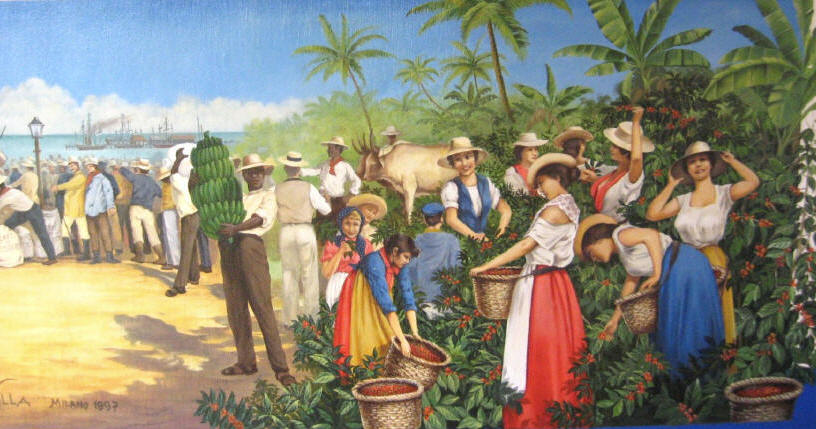
Doka Estate is not only a coffee estate, but also a mountain village with beautiful scenery. In addition to endless coffee trees, there is also a butterfly garden and a variety of colorful trees and bright and dazzling flowers. Taking us on a field trip was Jessica, a very enthusiastic Central American girl. She introduced us to the coffee production process in great detail. Many countries in Central America produce coffee, but Costa Rica’s coffee is known for its small quantity and high quality. Because the government strictly stipulates that bad beans are not allowed to be sown, the coffee trees in Doka Estate are also planted with bananas, because the roots of the banana trees have a similar effect of fixing nitrogen and have the ability to retain water, which allows the coffee trees to grow better. From the beginning of the growth of the coffee tree to the time of harvest, the full and bright red coffee beans among the green leaves must first be manually inspected and picked by hand to ensure quality. During the coffee harvest season from November to February of the following year, a joyful atmosphere always permeates the air. At this time, there will be hundreds to thousands of coffee farmers working hard to harvest coffee and carefully hand-select qualified coffee red fruits. Usually, they tie the basket to their waist and pick the mature beans with both hands, very skillfully. A large basket of coffee beans weighs about thirty kilograms. Each person can pick thirty baskets per day. The owner of the manor pays two dollars for each basket, and can earn sixty dollars including food and accommodation. They work ten hours a day, seven days a week, until the harvest is over.
Each basket of fruit undergoes rigorous inspection, and this coffee harvesting tradition has been maintained for nearly a century. The harvested coffee beans are washed and peeled. The good ones sink and the bad ones float out. Jessica explained that the bad ones are used in the local market and the good ones are exported. The equipment here is traditional and still driven by water power. From growing, picking, selecting, peeling, fermenting, drying, storing, to the final roasting process, the coffee is processed completely using traditional methods, so that the originally delicate red beans can calmly shed their heavy makeup and be dried using natural sunlight. The coffee beans are regularly raked, so that they can evenly absorb sufficient sunlight, remove moisture and retain the nutrients brought by the Central American sunshine. Finally, they are put into the roasting machine, allowing the unique fragrance accumulated in the body to overflow. Different baking times will result in different flavors.
Jessica also specially introduced the "male beans" in coffee. Male beans were once discarded as defective beans because of their smaller and rounder appearance; however, now male beans are generally highly regarded, and some even call them the caviar of the coffee world. In the past, farmers would pick the beans by hand when harvesting. But later I gradually discovered that male beans have a very concentrated and rich aroma. Intuitively speaking, the female coffee bean is half-sided, with a relatively flat appearance and obvious grooves in the middle after roasting. One fruit wraps two female beans; but the male coffee bean is a whole bean, so the aroma and flavor of the male bean are stronger. Only 5% of a coffee tree is male beans, and the rest are female beans. This means that for every 100 grams of production, only 5 to 6 grams of male beans can be selected. This makes male beans even more rare and precious, and they are often regarded as the best coffee. The characteristics of Doka coffee itself are bright, clean, balanced and highly flavored, with an elegant sour aroma. It is loved by the world, especially Europeans. The coffee produced here has been known as golden coffee for hundreds of years.
We are witnessing the process of "turning beans into gold". Jessica invited us to try the coffee. The aroma was fragrant and we took a sip. It was very rich and full. Not only was it not bitter, but there was a hint of roasted coffee aroma in the mouth. After waiting for a while, the aroma remained the same. The most different taste from the coffee we usually drink is that it has a special fruity aroma from Central and South America. The original flavor is delicious without extra sugar and milk. After a few more sips, you will slowly understand the content in it. It is very rich. You must drink this kind of coffee once in your life.
We had lunch at the coffee farm. The food was gallo pinto (black bean rice) and organic vegetables provided by the ecological garden. These vegetables are naturally grown in the fertile volcanic soil and are naturally healthy.
On the return trip, in order to savor the coffee from Doka Estate, we all bought a few bags of "golden beans" to take home and enjoy slowly.
More details: http://www.paaca.us/new_page_57.htm
World-class Arabica coffee and bananas are the two major cash crops exported by Costa Rica
The world-famous Costa Rica coffee estate
Costa Rica has a population of only 3.5 million, but there are as many as 400 million coffee trees
Doka is not only a coffee garden, but also a mountain village with beautiful scenery
The garden has a variety of plants and exotic flowers
Butterfly Garden
Sources and usage
This piece is republished or synchronized with permission and keeps a link back to the original source.