Pearl of the Desert | A journey of Chinese people searching for gold and building roads in Western America to find their roots 4
Arizona Chinese Historical Association Zhang Zhaohong On the third day of the trip, we set off to visit "Locke". In the 1860s, for...
Arizona Chinese Historical Association Zhang Zhaohong
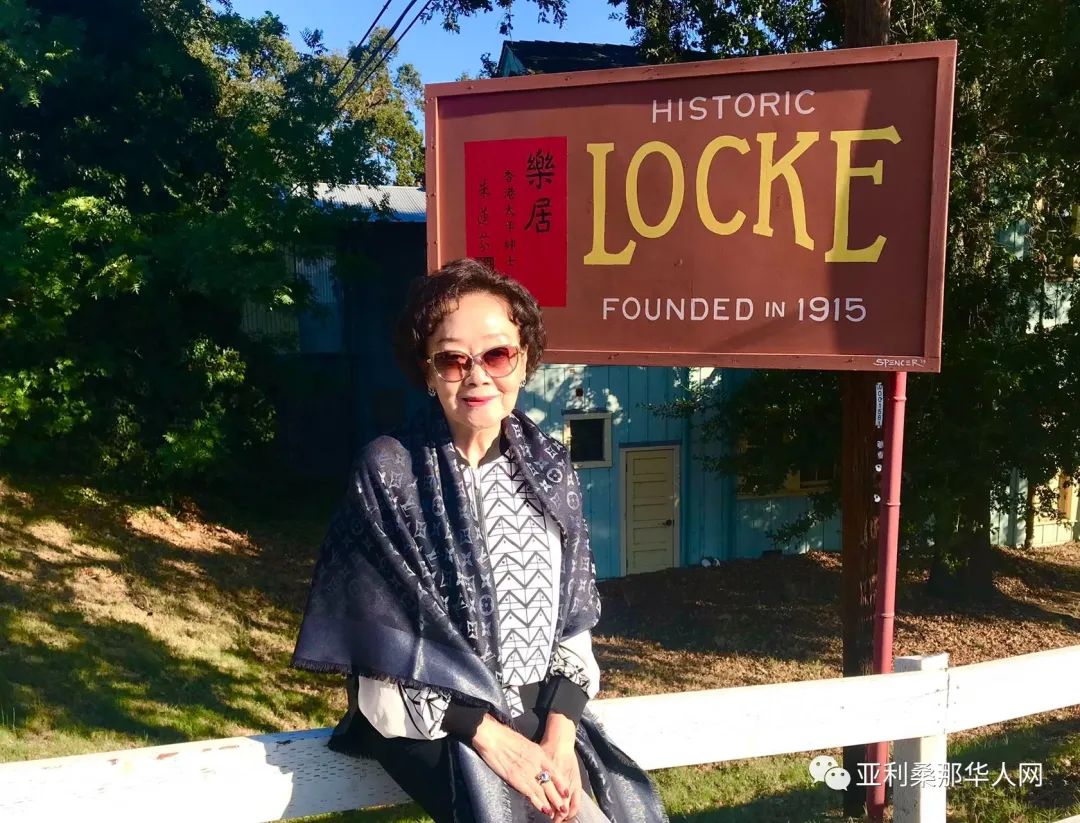
On the third day of the trip, we set off to visit "Locke".
In the 1860s, in order to turn swampland into farmland, the federal government wanted to build a dike near Leju Town. After thousands of Chinese laborers completed construction of the transcontinental railroad, they continued to be employed building levees. Chinese workers, who earned less than a dollar a day, had to use shovels and wheelbarrows to build the more than a thousand-mile dike.
In 1915, some Chinese residences were engulfed by fire, and the farm owners allowed the residents to establish their own towns. On the rented land, the Chinese community built a post office, a cinema, a restaurant, a food market, a dry goods store, a barber shop, and a variety of businesses. Leju prospered over the years, with 600 permanent residents and more than a thousand regular visitors.
In 1971, Leju Town was listed as a "National Historic Area" and in 1999 it became a "National Historic Area Milestone". The Department of the Interior of the U.S. government erected a monument in Chinese for Leju Town:
"This place has the significance of national characteristics and commemorates the history of the United States.
Leju Town has become the largest and most comprehensive example of Chinese rural American communities in the United States. There is no other comparable area that can clearly show the American life of Chinese rural areas."
President Zhang Sujiu took photos in Leju Town
There were bronze statues of Confucius and Dr. Sun Yat-sen in Leju Town. Everyone went to take photos.
Zhang Zhaohong, He Huijun, Chen Canpei
Leju Town Street View Photography Li Su
After visiting Leju Town, the tour bus arrived at Coloma, the first place where gold was discovered in California. We visited the “Gold Discovery Museum” here.
In February 1848, two Chinese men and a woman took the American Eagle and crossed the Pacific Ocean from Guangzhou to San Francisco, California. They became the first Chinese immigrants to land and stay in "Golden Mountain". In the following two years, waves of Chinese arrived one after another, leaving their historical footprints here.
By 1860, there were 24,000 Chinese workers in California. From 1848 to 1883, California's gold production value reached US$1.2 billion, accounting for two-thirds of the total gold production value in the United States, a considerable part of which was mined by Chinese miners. He created huge wealth and accumulated abundant capital for the United States.
In the afternoon, we went to Auburn. This was the first stop of the 1849 gold rush. In the museum, we saw many materials and items used by our Chinese ancestors during the gold rush era.
After this article, also talk about the characters and stories of this tour group.
When I first received the travel instructions, it said, "You can bring an electric kettle and instant noodles for emergencies." But this time the tour was of a high standard. In addition to eating fast food in a hurry, most of the dinner was at a restaurant with drinks and food. Sister Zhang brought two boxes of beautiful wine, and the big boss took turns paying the bill. The tour group became a group of relatives and friends. Instant noodles etc. were of no use, so we traveled with the group on the "Eight Thousand Miles Road to Clouds and Moons."
During the trip, I got acquainted with President He Huijun, President of Huamei Fund and Executive President of the American Investment and Immigration Association. He is the CEO of two Nasdaq-listed companies. He is committed to cooperation between Chinese and American enterprises and helps high-quality Chinese and foreign companies to be listed on Wall Street in the United States.
Mr. Ho is virtuous, enthusiastic and forthright, good at identifying talents, making friends and achieving great success. He rents an office in Trump Tower next to the New York Stock Exchange and is able to mobilize huge amounts of funds to invest in high-quality companies. It is not an exaggeration to say that he has everything on his plate. Moreover, he is also a successful entrepreneur with a sense of social responsibility.
At a birthday party by chance, Mr. He gave gifts to make the friends smile brightly.
During the trip, President He invited wine at the winery and extra dishes for dinner. Once, during a holiday, a temple was closed and there was only a worker cleaning the lawn. Mr. He, who was accustomed to the world, lost no time in giving a tip, and soon the staff who took the key were attracted. Mr. He also gave a "ghost-turning" tip, so the temple door finally opened, and the group members filed in and enjoyed the visit.
He Huijun (middle) signed the banner as a souvenir
After the trip, Mr. He invited me to visit his office, so I learned that he cooperates with international investment funds and is a legal shareholder of several NASDAQ main board listed companies.
In the living room of a high-rise building in Los Angeles, there are huanghuali sofas inlaid with golden chrysanthemums, high-end mahogany furniture, various purple sand teapots, famous European paintings from auctions on the walls, and a separate room dedicated to the unique bronze fairy Buddha.
There is a two-meter-long ink painting hanging in the office. The rooster in the painting is standing on a rock, but it does not make a classic loud sound. Instead, after making a blockbuster, it looks back at the colorful birds flying in the distance. The rooster is surrounded by bunches of red and purple grapes. The harvest season makes people feel happy, as if they smell the mellow aroma of fine wine. There is an inscription and postscript in regular script on the painting: "Great good fortune has arrived."
The lunch coincided with Mr. He appointing a CEO to take up the post on Wall Street. During the dinner, there was Maotai wine and delicious food. He also mentioned that he would take a trip to Arizona to inspect the environment and look for business opportunities.
"Arizona", you can pronounce it as "pull you in the sauna" or "pull you in the sauna". Investors with experience and far-sightedness will surely be able to see the prospects and strike gold in this hot land of the Sonoran Desert.
Sources and usage
This piece is republished or synchronized with permission and keeps a link back to the original source.