"Xu Wei Collection": Wind Chimes
> Zhang Zhaohong The unique wind chimes in the world. In ancient times, wind chimes were bells hung under the eaves of Buddhist temples and pagodas. They swayed and made a crisp tinkling sound when the wind blew. There are many types of wind chimes...
Zhang Zhaohong
>The unique wind chimes in the world
Wind chimes were hung under the eaves of Buddhist temples and pagodas in ancient times. They swayed and made a tinkling sound when the wind blew.
There are many kinds of wind chimes, including bamboo, stone, ceramic, metal, shell and so on.
Wind chimes have visual beauty, auditory enjoyment, and refreshing feeling. They are both small home decorations and religious objects; they can be relaxing or solemn and peaceful.
"The Legacy of Kaiyuan Tianbao" of the Tang Dynasty records: In the bamboo forest of King Qi's palace, pieces of jade were hung. Every night when the sound of broken jade pieces was heard, one knew there was wind. It was named "Zhanfeng Duo" and the wind direction could be measured. This should be the earliest origin of wind chimes.
In fact, although Chinese bells, bells, and bells are different from Western bells and chimes, they have many similarities in shape and hearing, which enriches the creation and application of wind chimes.
Wind chimes have beautiful sounds and aesthetics. Ancient Chinese people hung wind chimes, but they were more practical than decorative. The sound of "wind blowing and jade vibrating" was used to achieve the purpose of calming the mind, cultivating the spirit and praying for blessings. "The garden is tied with red ropes and densely decorated with ringing golden bells. Every time a bird or magpie flies, the garden is frightened." This kind of wind chime is used as a warning.
In terms of architecture, Song History. It is recorded in the Book of Etiquette: "There are pine trees and cypress trees in the courtyard of the Mingtang. There are no halberds at the door, and bells hang from the corners of the hall." The Mingtang has been an important political and religious place in all dynasties in China. There are no soldiers, but bells are set up at the four corners of the eaves, which conveys vigilance and peace, and lacks a harsh atmosphere.
In terms of Feng Shui at home, wind chimes use the "good charm" of the sound to attract "good luck". When hanging wind chimes at this time, the most important thing is the placement.
Wind chimes have three meanings in Buddhism: awakening, joy, and preaching. They are commonly found in Buddhist ritual vessels, musical instruments, and eaves and corner buildings of pagodas and temples.
There is a "Wind Chime Gatha": "The whole body seems to be hanging in the void, no matter the east, west, north or south wind, it will always say Prajna for him, ding ding dong dong ding ding dong." "The so-called "ding-ding-dong-dong" represents the Buddhist philosophy of "suffering, emptiness, impermanence, and selflessness." It is briefly described in the Tripitaka: "The sound of the wind chimes makes the people boo, the truth shines brightly on the anointing, and the sound of the teachings silently rings the wind chimes."
Wind chimes are found all over the world. Not only are they increasingly innovative in artistic creation, but in recent years they have paid more attention to the "musical" performance of wind chimes. Different types of wind chimes are also used as percussion instruments in classical music. Wind chimes may be the most popular in Japan in the world, and they are one of the representatives of Japanese summer scenery.
>Japanese Ceramic Wind Chimes
In summer, hang a string of wind chimes on buildings and door eaves. The wind will make a pleasant and crisp sound, which can make people feel peaceful, auspicious and safe. When there are sacrifices and celebrations, the image of hanging wind chimes with a short blessing message can also be said to be a beautiful combination of art, culture and music.
In Bali, Indonesia, due to the advocating polytheistic beliefs, it is said that the wind god uses bamboo wind chimes to indicate the arrival of the wind god and show his power with the frequency of the wind blowing the bamboo tube.
In the United States, wind chimes mean good wishes. Hearing the sweet sound of wind chimes every day brings good luck. Americans often choose wind chimes as gifts. They generally like simple colors, mainly natural primary colors or bronze. The author found that the price of wind chimes ranges from more than ten yuan to several hundred dollars.
If it is given by a good friend, the sound of the wind chimes represents greetings; if it is given by a couple, it represents love and longing. In fact, when the wind blows, the sound of a bell reminds you of someone. If you give it to others, they will remember you.
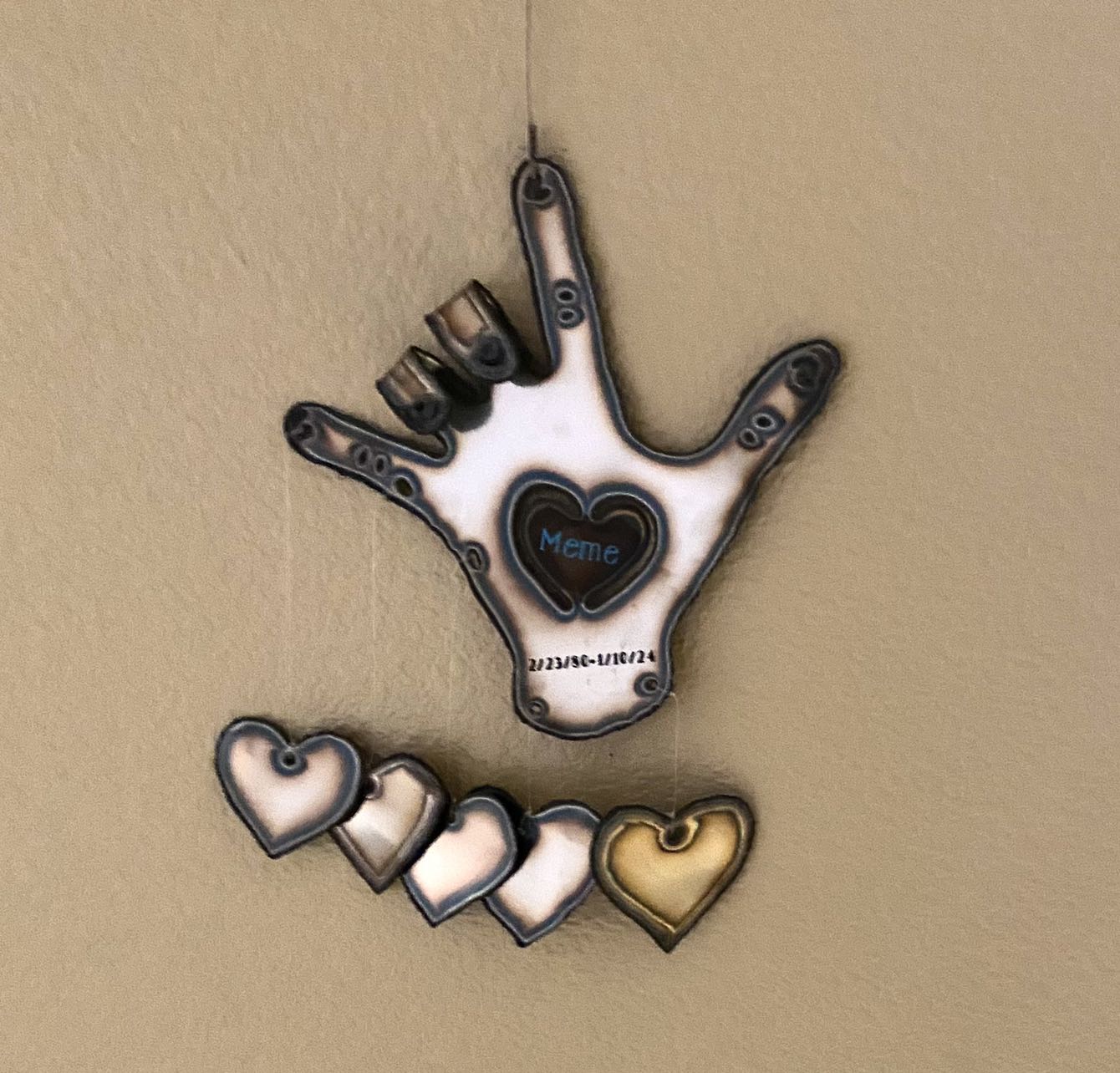
The day before yesterday, a deaf-mute friend gave his daughter Xue Wei a carefully handmade wind chime. This wind chime is made of thin stainless steel sheets that are ablated by a high-temperature spray gun. This is the sign language "I Love You!" for a deaf-mute person.
The little finger represents the letter "I", which means "I", the thumb and index finger form the letter "L", which represents "Love", and the thumb and little finger form the letter "Y", which represents "you".
The sign language "I love you!" is also very popular around the world.
This special wind chime has a heart shape on the palm with the word "meme" engraved in it. This is a nickname given to Weiwei by deaf-mute people. The five heart pieces below are connected as a bell, which is a memory of Weiwei. Together they become a unique memorial in the world. The wind blew the bell, and the sound was particularly clear and melodious.
Instead of hanging the wind chime outside to sway in the wind, I hung it indoors and put a "concentric knot" to express my longing for my daughter.
January 29, 2024
Sources and usage
This piece is republished or synchronized with permission and keeps a link back to the original source.