Pearl of the Desert | Chinese History in Arizona, USA (Sixty) Discrimination and Anti-Discrimination (2)
Arizona Chinese Historical Association Zhang Zhaohong American "Homologous Society" organization Phoenix City Same Origin Chapter (2012) In 1895, a group of California...
Arizona Chinese Historical Association Zhang Zhaohong
American "Homologous Society" organization
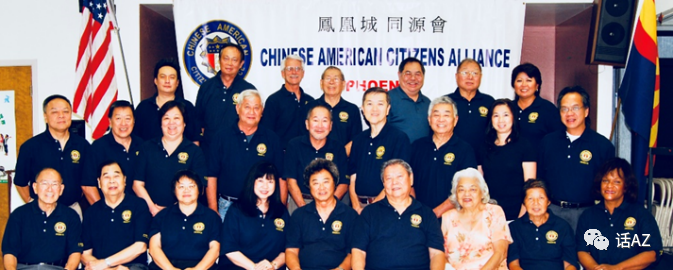
Phoenix City Same Origin Chapter (2012)
In 1895, a group of native-born Chinese in California established the "Homologous Society" organization with the purpose of fighting for the rights they deserved in the constitution and eliminating racial discrimination.
"Chinese" are almost everywhere now, but the number more than a hundred years ago was very limited. Chinese women came to the United States during the era of free immigration. In 1834, the first Chinese woman, Afong Moy, arrived in New York. Three years later, there were 1,784 Chinese women living in the United States, mainly in California, Nevada, Hawaii and Idaho. During the Golden Tide and the development of the American West (1840 to 1880), due to the primitive and difficult living conditions in the West, adventurers were mostly single men. The prostitution industry came into being. Early Chinese immigrant women were also deceived or forced into prostitution.
In 1870, of the 3,526 adult Chinese immigrant women in California, 2,157 were classified as prostitutes. In 1870, the United States passed a law outlawing prostitution. This law was used by anti-Chinese people as one of the excuses for passing the Chinese Exclusion Act in 1882. Since then, the number of Chinese immigrants has dropped significantly. By 1900, there were 107,488 Chinese immigrants in the United States, but by 1870 there were only about 4,000 Chinese immigrant women, and this number remained for nearly half a century.
According to the Chinese Exclusion Act, Chinese in the United States are legally excluded from the possibility of becoming American citizens and have been living in isolation in the so-called "Chinatown" to fend for themselves. Not only are new Chinese immigrants unable to return to the United States, but even the wives and children of Chinese in the United States cannot go to the United States to reunite. Due to the lack of Chinese women, Chinese men are not allowed to marry foreigners. Chinese people in the United States lack families. Chinese descendants are bound to be limited. There are even fewer Chinese people who can receive education, hold equal rights ideas, and organize groups to fight.
In 1895, more than a dozen Chinese-American youths born in the United States established the first Chinese-American civil rights group in San Francisco with the "Sons of the Golden State". In 1915, the Sons of the Golden State changed its name to the Chinese American Citizens Alliance (C.A.C.A.). In 1904, it was established as the "Association of the Same Origin". Its purpose was to fight for the rights that Chinese Americans should have and to oppose discrimination against Chinese Americans.
From 1924 to 1988, Tongyuan Federation published the influential "Jinshan Times". From 1924 to 1946, he repeatedly testified and lobbied before the U.S. Congress, advocating the repeal of the Chinese Exclusion Act and striving for a fair immigration policy. In 1946, the Synod was a major supporter of a bill that promoted non-quota immigration of wives of Chinese-American citizens to the United States. In 1952, the Same Origin Association advocated for the passage of the McCarran and Winter Acts, which exempted spouses and minor children of U.S. citizens from immigrating to the United States within quota limits. In the same year, he criticized the U.S. Consulate in Hong Kong for using investigation methods to discriminate against Chinese people. In 1980, he objected to the court’s unfair sentence against Chinese-American Chen Guoren. From 1950 to 1965, the Homology Association worked together with the National Chinese Welfare Association to support the 1965 Immigration and Nationality Act, which greatly increased the number of immigrants from Asia, Africa and the Middle East. In 2000, the US court was asked to vindicate the espionage case of Chinese space scientist Wen Li. In 2008, urged Congress to honor Chinese and Asian Americans for their loyal participation in the American Civil War. In 2012, he pushed Congress to pass resolutions HR683 and SR201 to apologize for laws that discriminate against Chinese people, such as the Chinese Exclusion Act. In 2018, we pushed the U.S. House and Senate to pass the Chinese American Veterans of World War II Congressional Gold Medal Act to pay tribute to more than 20,000 Chinese American World War II veterans.
National Chinese Welfare Federation
Chinese Welfare Branch Chairman Yu Wenjin
The National Chinese Welfare Federation, established in 1957, was the only Chinese organization registered with the federal government at that time. Chinese associations in cities across the United States and all-overseas groups became ex-officio directors of the National Chinese Welfare Federation, in order to concentrate the power of Chinese across the United States to fight for the greatest rights and interests.
After the implementation of the "Chinese Exclusion Act", the vast majority of Chinese were deprived of the right to immigrate to the United States. In 1906, due to a fire that destroyed the information at the San Francisco Immigration Bureau, Chinese in the United States took the opportunity to pretend to be Chinese Americans and apply for immigration as direct relatives in China. As a result, a large number of so-called "paper sons" came to the United States. This was caused by the discrimination under the Chinese Exclusion Act and the harsh procedures of the Immigration Service.
Yu Wenjin, the former chairman of the Phoenix Chinese Welfare Branch, wrote an article, the excerpt is as follows:
"After World War II, the Chinese Exclusion Act was repealed, but the quota allocated to Chinese immigrants was only 105 per year. It was difficult to get a visa to come to the United States by the right way. Because at that time, the way to "smuggle" to the United States was not very common, and the only way was to buy and sell "fake paper" (Paper) Son), who pretended to be an American citizen and applied to come to the United States as his father. As more and more cases of "fake papers" were used to impersonate people, the U.S. Immigration Bureau finally launched a large-scale search of Chinese people and prosecuted illegal immigrants.
At this time, the resentment of Chinese Americans who had been aroused by the harsh immigration regulations for decades erupted at the same time, and the roar of injustice shocked communities across the United States, so they united and concentrated. As a result, groups came into being to oppose the bad immigration practices in the United States. At that time, Chinese representatives from various cities in the United States held an emergency meeting in Beijing and established the "National Chinese Welfare Association" (later branches were established)
The focus of the Chinese Welfare Association was to work with other overseas Chinese groups to complain to the Congress and the government, requesting improvement of immigration regulations, and fighting for immigration. The number of immigrants was increased, and the immigration quota for refugees was increased. After many hard arguments, the U.S. Congress finally obtained fair legislation, which revised the annual immigration quota of 20,000 people from mainland China, an additional 20,000 immigrants from Taiwan, and a new rule of 5,000 immigrants from Hong Kong. Unmarried men and women can apply for each other to come to the United States to get married, which opened the door for new Chinese immigrants to come to the United States. , thousands of families immigrated, and the number of immigrants increased. Not only did this provide new overseas Chinese with opportunities to make a living, but old overseas Chinese also benefited from family reunions, and it also prospered the community economy. These benefits are difficult to calculate in terms of money, and they are all the results of the American Chinese Welfare Association’s benefit to the overseas Chinese. "
In 1969, the National Chinese Welfare Association held its fifth representative conference. Phoenix representatives Huang Xingli and Deng Wenhua and Tucson representatives Zhu Bochen and Zeng Bingyang jointly proposed to request the US Immigration Service to allow Chinese unmarried couples to come to the United States to get married. The General Assembly conducted proceedings in accordance with the proposal, and as a result, the new Immigration Act No. 259 was approved by the U.S. government, which took effect on May 11, 1970.
In 1975, a Chinese engineer in New York was beaten by the police over a parking problem, triggering a Chinese demonstration against police violence on May 19. Yu Wenjin published an article: This time the overseas Chinese in New York held a demonstration. Twenty-five thousand of them participated in the demonstration, building a majestic "Great Wall" and forming a raging torrent, exerting overwhelming power. This unprecedented great unity of Chinese people in the United States fully shines with the brilliance of the "yellow" light.
In 1995, Chen Yingfu from Tucson provided information about the so-called HK1905 proposal, which called for the abolition of four categories of close relative immigration, one of which was that brothers and sisters (the fourth category of priority immigrants) and their adult children were not allowed to immigrate to the United States. The National Chinese Welfare Federation and the Federation of the Same Origin strongly opposed this proposal and wrote an open letter to members of Congress and the Judiciary Committee, pointing out that the United States needs to value the family and strengthen the non-monotonous structure of the nation. We do not need policies that separate close relationships between family members. Due to staunch opposition, the proposal has so far failed to pass. (to be continued)
Sources and usage
This piece is republished or synchronized with permission and keeps a link back to the original source.