Desert Pearl | Chinese History in Arizona, USA (35) The earliest Chinese family in Flagstaff (3)
Arizona Chinese Historical Association: Zhang Zhaohong In Flagstaff (Flagstaff), there is a property bought by Huang Shizhi. It is a two...
Arizona Chinese Historical Association: Zhang Zhaohong
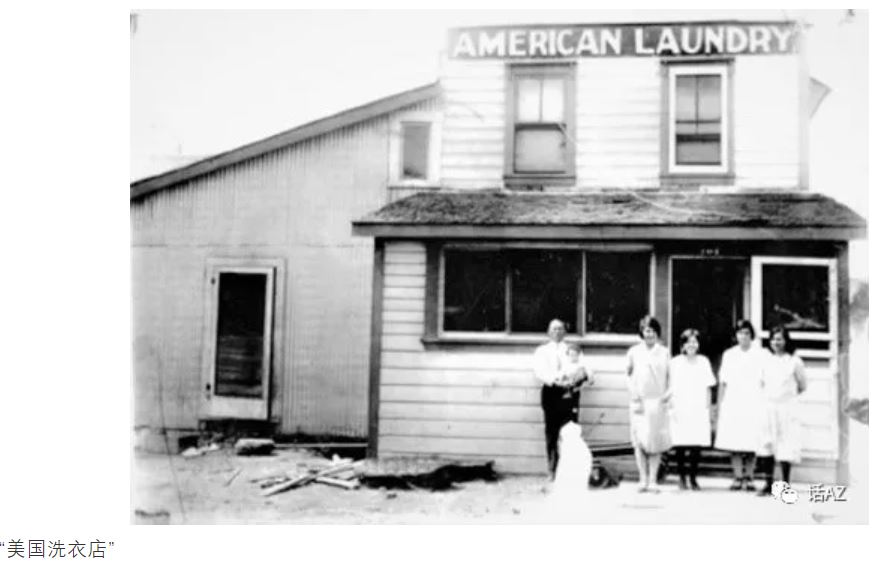
In Flagstaff, there is a property purchased by Huang Shizhi. It is a two-story timber frame building, ideal for expanding a laundry business on the first floor and providing living space for the family on the second floor. The new business is located locally on the corner of San Francisco Avenue and Phoenix Avenue. San Francisco Avenue stretches from the southernmost tip of the city to the northernmost tip of the city, and from this corner crosses the Santa Fe Railroad tracks and Route 66, known in Flagstaff as "Main Street."
As business continued to grow and prosper, the location continued to grow in popularity, even during the Great Depression. Everyone had to do laundry, and the customers were railroad and sawmill workers along Route 66, town residents, and travelers. Huang Shizhi is determined to stay. He wants to become a good American citizen and win the respect of the residents.
Huang Shizhi strives to integrate into the American lifestyle by working hard and providing the best laundry service. Over time, he proved himself and became happy and proud to be an American. Huang Shizhi named his company "American Laundry." Emphasizing his patriotism, the company's letterheads feature an American flag at the top.
The laundry room was equipped with several outdated pieces of machinery to expand its laundry operations. The older boys help their mother Xie Yao because they are able to handle the physical labor in the laundry. In 1921, William (Lema) was the first person born on the second floor of the laundry room. Soon after, another child, Margaret, was born, and the family outgrew the three-bedroom living quarters on the second floor, with three or four siblings in each room. Over a decade, six children were born on the second floor of the laundry room. The parents live in a corner of the floor and there is a bathroom for the whole family on the first floor, as well as a toilet.
Whenever Huang Shizhi ordered Chinese goods from San Francisco, he always bought lottery tickets from Chinatown in San Francisco, and the clerk sent him the lottery tickets and goods together. He subscribed to the San Francisco Chinese newspaper, and one day in late 1929, at the start of the Great Depression, he read that one of his lottery tickets matched the winning numbers.
Huang Shizhi won a whopping $20,000 prize! In today’s money, this money has a purchasing power of over $300,000! He made a quick trip to San Francisco to collect his winnings while dreaming about how this windfall would help his growing family and business. Huang Shizhi used the lottery money to build an additional building to the main building, which was the first step in creating a commercial operation.
The new addition accommodates modern appliances and a wood-fired boiler that burns steam and hot water. Steam enters the press and ironing machine to maintain a stable temperature, and water is stored in a 1,000-gallon water storage tank to provide water to the washing machine. Huang Shizhi installed equipment such as a large 6-foot-long horizontal washing machine, dehydrator, tumbler (dryer), press, clothes making machine, and hand-crank machine. Hoppers are several feet wide steam-heated drum ironers used for ironing napkins, tablecloths, pillowcases, and linens, including entire sheets. The items are fed into the multi-roller cart and the other end is laid flat and dried to be folded and ready for packaging.
By 1930, the laundromat was fully operational. Huang Shizhi hired several employees to work with his family on pressing, folding and sorting, and finally delivering them to customers. Boilers burn a log of wood every day, and large electric motors and industrial pulley systems keep washing machines running. The boys operated washers, extractors, drums and other necessary preparatory operations.
Everyone in the family was at work, and with the latest equipment, the laundry business soon reached its peak, employing as many as 12 people. A few years later, Huang Shizhi purchased wood from multiple suppliers and burned it into coal. This coal has proven to be cheaper and more efficient. A large hopper with an auger was installed in the laundry room to feed the coal to the boiler. The boys were happy because shoveling coal was less work than chopping and hauling wood to the boiler room, which was often done in adverse weather conditions, especially in winter.
It’s hard to believe that a few years later, Huang Shizhi won the winning lottery ticket again in San Francisco, but the amount was smaller than the first time. By this time, there were nine people in the family living upstairs. So he built a house separate from the laundromat on the opposite street. It was a dream house, a large two-story house with nine bedrooms, five bathrooms, four kitchens, living and dining rooms and a cellar. The rooms are arranged like mini apartments to accommodate everyone in the family. In the cellar, Huang built a coal- and oil-fired boiler to heat hot water, which then flowed to radiators throughout the house.
As lottery funds and business prospered, Huang Shizhi's assets grew. He has an empire! Using his business sense and gambling experience, he developed a master plan to develop the property and invest in other ventures. In many cases, people who enjoy "easy money" like lotteries and inheritances have the urge to make more money.
Huang Shizhi has the confidence to take risks. At first, he limited himself to investments he understood, buying real estate only in San Francisco, Phoenix and Agassiz Street. Perhaps this goes back to his youth, when he was confined to the borders of San Francisco's Chinatown. He became a landlord and rented out many properties. A portion of the land is owned by the Santa Fe Railroad, which Huang personally managed to secure a 99-year lease, the longest real estate lease possible.
Huang Shizhi was still a gambler and he continued to invest, but he invested in things he didn't understand, such as oil wells in Texas. As you can imagine, he was bankrupt.
Huang Shizhi then invested money in Cisco, which prospered for a while but eventually failed. He is the major shareholder and has invested $1,000. He was also one of the original investors of the Monte Vista Hotel. This 63-room and suite luxury hotel was built in 1926 on historic Route 66 in downtown Flagstaff.
The hotel invested by Huang Shizhi is one of the most haunted hotels in the United States. John Wayne swore he saw the ghost of a phantom bellboy who wandered the halls at night, knocking on doors offering room service. Huang Shizhi invested in this ghostly hotel. By 1955, Huang Shizhi's family cashed in the stock for $27,000. In today's money, adjusted for inflation, that would be $260,000.
Huang has maintained membership in the Wang Charitable Association and contributed to philanthropic efforts with organizations in Flagstaff and San Francisco's Chinatown. He also bought "aviation national salvation coupons" to support China's war of resistance. Despite the Chinese Exclusion Act, relations between the United States and China improved during World War II due to issues with Japan. (to be continued)
Sources and usage
This piece is republished or synchronized with permission and keeps a link back to the original source.