Pearl of the Desert | Chinese History in Arizona (34) The earliest Chinese family in Flagstaff (2)
Arizona Chinese Historical Association: Zhang Zhaohong On September 28, 1905, Huang Shizhi boarded the ship and returned to San Francisco with a prepaid return ticket. He was arrested by the immigration officer at the port...
Arizona Chinese Historical Association: Zhang Zhaohong
>On September 28, 1905, Huang Shizhi boarded the ship and returned to San Francisco with a prepaid return ticket. He was detained by immigration officials at the port, where arrivals are questioned to prove their eligibility to enter the United States.
Huang Shizhi can speak fluent English, has a birth certificate in his hand, and has two witnesses who can prove that he previously lived in San Francisco, so he has the right to re-enter the United States.
He returned to San Francisco, doing odd jobs and errands in the small shops and herb shops he was familiar with, until he had enough money to return to the small town of Ash Fork, Arizona, where he continued to cook and wash clothes for quarry and railroad workers. During these three years, he learned that his wife had died and his son was living with his wife's family. He had hoped to bring his wife and children over, but in fact, given his financial situation, he realized that it would be impossible to care for his disabled wife and hire servants in the United States.
After Huang Shizhi had saved up, he returned to China for the second time, this time to find a woman with the ability to work. With the help of an agency, he entered Guangzhou from Hong Kong again. A 16-year-old farm girl named Xie Yao was chosen and her parents' permission was respectfully sought.
Two months later, after successful negotiations with the woman’s family, they got married. In 1911, before returning to the United States, his wife gave birth to her first son. With no financial future in China, Huang Shizhi decided to return to the United States. Because of the Chinese Exclusion Act, he once again left his new family in China. The son he had with his ex-wife has been raised by his grandparents.
In September of the same year, Huang Shizhi returned to San Francisco. Due to the 1906 San Francisco earthquake, City Hall's archives were burned. Anyone who lived in San Francisco before the earthquake was almost automatically granted citizenship, requiring only the presence of two witnesses. Anyone willing to lie can become an American citizen. After spending time in San Francisco, Huang Shizhi returned to Ash Fork, Arizona. There he worked and sent money to his family in China while making plans to bring them back to the United States.
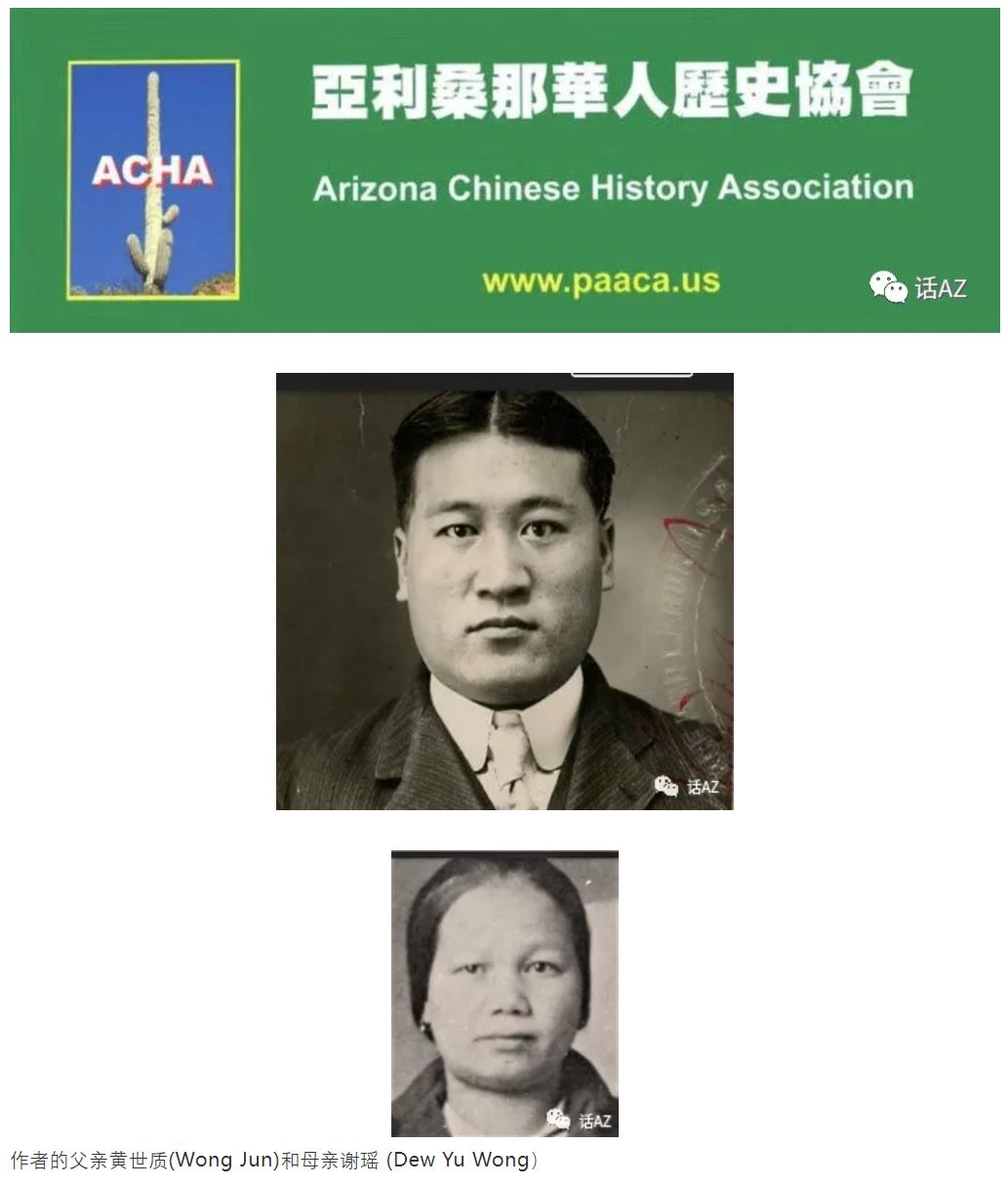
>Huang Shizhi prepared the necessary documents. He returned to China for the third time and was happy to see his family. His second wife and six-year-old son were eager to go to the United States, but the first wife's family was determined to have their son raised by them, and the boy was unwilling to leave his family. Huang Shizhi had to give up, even though he had made appropriate applications for this for his eight-year-old son. He didn't want to waste the application and sold the birth certificate to people who wanted to bring relatives or friends to the United States, known as "Paper Sons."
A family wanted Huang Shizhi to bring a boy to the United States pretending to be his son. The boy was about ten years old and his name was registered as Wong Ben Sen. Huang Shizhi used the money he earned to pay for his family's move to the United States. Although Huang Benson was only ten years old, Huang Shizhi gave him a thorough education for the voyage and adventures he would face, especially the inevitable interrogation by customs officers upon arriving in the United States. It's a gamble, but one the Paper Son family is willing to take.
Huang Shizhi promised to send money from the United States to help his wife's parents make ends meet. He also promised to send money to his first son's family. On September 12, 1916, the four of them boarded the cheapest cabin on a Chinese merchant ship and returned to the United States. Suffering from seasickness almost the entire trip, without much sunlight or fresh air, we finally arrived at San Francisco's Angel Island.
The "Chinese Exclusion Act" only allows businessmen, clergy, diplomats, teachers and students to enter the country, and workers are prohibited. Over the past 30 years, the U.S. Immigration Service has investigated and interrogated more than 1 million immigrants. Among them, 175,000 Chinese were admitted, and about 20% were rejected. The playthrough process is often brutal and humiliating! Chinese immigrants complain that they are held in cages like criminals for weeks or months and subjected to lengthy and tense interrogations.
Xie Yao appeared weak and sick and was ordered to go to the hospital for a physical examination. It was determined that she was caused by the hardships of the voyage and pregnancy. If it is determined that she has any disease, she will eventually have to return to China. New entrants will undergo a thorough interrogation.
>Huang Shizhi's testimony satisfied the inspector and no further action was taken. Xie Yao was interrogated through an interpreter. "Paper son" Huang Benson was only ten years old. When asked about his village and residence, the inspector showed him photos. There seemed to be no particular similarity between Huang Benson and his alleged father or stepmother. Perhaps the inspector did not think it was enough to make it a problem. The last one is the youngest son Wong Ben Jun, but he is only five years old and looks exactly like his mother. Inspectors gave the family a favorable report, and immigration commissioners allowed legal entry into the United States.
They head to San Francisco's Chinatown. In order to make his wife and children feel more comfortable, Huang Shizhi bought Chinese staple foods and commodities, including rice, dried fruits and vegetables, Chinese sausages, salted eggs, pickled duck, soy sauce, sesame oil, canned fish, canned bamboo shoots and condiments, etc. In addition to food, he also ordered herbal medicines, which were used to treat most diseases or ailments. In San Francisco, the family boarded the Southern Pacific train bound for California. From there transfer to the Santa Fe Railroad to Flagstaff.
It was September, and we were going to face the severe winter in the future. They rented a small house in Flagstaff. He opened a laundry room inside and spent most of his time doing laundry. There is barely enough room for habitation. A wood-burning stove heats water, an old-fashioned washboard and a hand-cranked wringer are used, and laundry is dried on a string in the backyard. When the weather is bad, they are hung throughout the house.
To make money, Huang Shizhi worked in the kitchens of local restaurants and also made his own soap. He collected free used lard and grease from restaurants around town and alkaline the lye with his own recipe, which he learned from his previous job in a laundry. Life was difficult for the boy as he helped his mother with housework, but his wife never complained about this new toil.
When they ran out of precious Chinese canned foods and dry goods, Huang Shizhi would reorder them from Henry Chong & Company in San Francisco and send them to Flagstaff. Traditional eating habits make it easier for them to adapt to unfamiliar environments.
Sources and usage
This piece is republished or synchronized with permission and keeps a link back to the original source.