Pearl of the Desert | Chinese History in Arizona, USA (28) Early Chinese in Glendale (continued)
Arizona Chinese Historical Association: Zhang Zhaohong Arnold Ong has lived in Glendale for 51 years. At age 10…
Arizona Chinese Historical Association: Zhang Zhaohong
>Arnold Ong has lived in Glendale for 51 years. At age 10, he moved from Phoenix to Glendale where he remained until his death in 1997.
He said in the oral history interview that my father came to the United States as a businessman. In those days, there were quotas for different races; when he brought me over, I became the son of a merchant. After World War II, Congress passed a bill that automatically made a person a U.S. citizen when he turned 18.
He mentioned: My mother speaks Chinese, but she died when I was ten years old. My father died when I was 20 years old. My father and I speak English because he was educated in the United States. We follow certain Chinese customs, such as respecting our elders and addressing them according to their age and seniority.
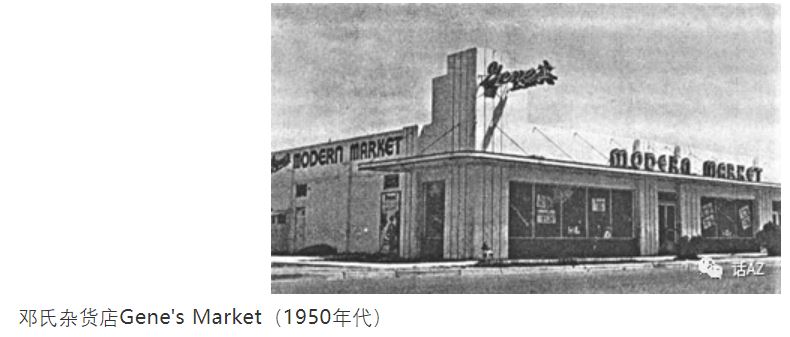
In the 1920s to 1940s, local Chinese came from the Guangzhou area. When a family runs a small business and is successful, they will write and say, "Hey, we're doing great! Come over here!" ''ONG'' here The surname and the "TANG" surname are both from the same Deng family.
Why do the Chinese develop grocery stores? Because most of them from China are poor. They had a hard time in their hometown and they had to go to the United States to try to start over. After two or three generations, like my children, all went to college. They don't want to do grocery stores. Because the working hours are too long, 7 days a week. They would rather find a job in a big company and work 40 hours a week. Hours. They went to college for a year. But in those days, the opportunities were not there.
As time went by, the inventory changed as Mexicans came into the area and started stocking up on certain things that Mexicans liked more than T. More bone steaks, you sell more sausages. The meat line changed. They started wanting beef heads, pig heads, livers, and kidneys.
We couldn't get enough of them because of the shortages during the war. Cigarettes and jelly, those were considered luxuries. Because they had sugar in them. I remember bananas were hard to come by and tea was hard to get and when our regular customers wanted it, we would give it to them and say, "Sorry, we don't have it." "At that time, food stamps were used, gasoline was rationed, and there were A, B, and C cards.
Arnold Ong mentioned that when I grow up, do everything in the store, sorting bottles, etc. Whatever needs to be done, stock the shelves and put all kinds of things on the shelves.
We are a minority and this is the first thing my father taught me. Any bad thing you do will affect all of you, all Chinese people. So, go out and do something, and do it well. Because if you do bad things, they will say that all Chinese people are like that. "So I was afraid that I might say or do the wrong thing, and that it wouldn't affect my family, but the entire Chinese race.
And over time, that changed. It has changed now. Like my kids would say, "To hell with it, I'll do whatever you want!" "It was just like a normal, average American kid.
There wasn't a lot of social fun in the 1940s. The Chinese got together on holidays, partying like the 4th of July. Most of the social visits were after get off work. In those days, after the stores closed, we would go to the movies. If someone got married, there was a party, and everyone would get together, or if someone died, go to a funeral.
You know, if you looked down on us, you would be told: instead of working eight hours a day, we have to work 16 hours a day, so be successful! I want to give you a great illustration: Do you know Thunderbird Bank in Glendale? There was a gentleman who was an official of the bank and I was very close to him. We hung out together and went out to eat together. One day he asked, "Arnold, you have a nice house. Across the street, George Sheen has a nice house. Across the street is Dr. Kon, and he has a nice house. But, how the hell do you do that?" I said, "If you and your wife work 16 hours a day, in 20 or 30 years, this is how money is made." He said, "Gosh, I don't think a human being is physically capable of working more than 40 hours a week. hours. "
My family and I are open 364 days a year. It opens at 8 a.m. and closes at 9 p.m. I was in that store for 32 years. The only day we have been closed has been Christmas for 32 years.
My wife (Louise) is from California and she is also Chinese. Their family was in the wholesale produce business. We were married in 1956 or 1957. She has been working with me over the years.
We don't socialize much, but she does more than I do. She joined the Glendale Women's Club. She started to be active in different things, but she was still tied to the store, she had to work, she was there seven days a week. We had a lot of Russian clients at the time because they mostly lived west of Glendale and we got along really well.
We visit each other with Chinese people from surrounding communities. You visit them this week, and they will visit you later. That's it. There were no televisions and no video games to play. Technically, you sit there while the kids play. We would make small talk or discuss business, and it is helpful for business terminals to be social in this way.
We did double or triple the size of the store and improve it and put in new equipment. If you don't improve your store, you risk losing business. Because new stores come in every day or every year. Today, there are a lot of chain grocery stores, and you don't see independent merchants, not just minorities, but the number of independent grocery stores for Americans in general is very small. Everything has been chained.
The Chinese in the Glendale area also participated in the political power of Glendale. In the 1960s, I served on the City Council for a year and a half. But most Chinese are not politically active. And we grew up thinking about our own business and not getting involved in politics. Now, some young people are trying to enter the political arena.
>Arnold Ong's oral history article is relatively long, and this article only excerpts part of it. To view the full text, please see Glendale Chinese Oral History Interview, Contributor: Abbitt Jerry.
Sources and usage
This piece is republished or synchronized with permission and keeps a link back to the original source.