Tradition | Fragrant rice dumpling leaves in May, Dragon Boat Festival health
In order to enrich the summer cultural life of the community, the Arizona Asian Alliance (AZAA) initiated and organized the "Welcome the Dragon Boat Festival and Make Zongzi" activity. On the afternoon of June 1st, hundreds of communities...
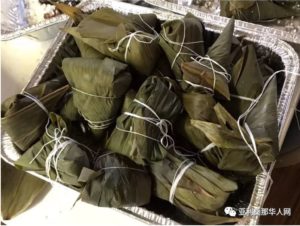
In order to enrich the community's summer cultural life, the Arizona Asian Alliance (AZAA) initiated and organized the "Welcome the Dragon Boat Festival and Make Zongzi" activity. On the afternoon of June 1st, hundreds of people from the community came to Trinity Christian Fellowship Church in Chandler, and happily joined in the party of making and eating rice dumplings. In addition to Chinese people, this event also attracted a large number of friends from other ethnic groups to participate. Zhang Chuandong was responsible for introducing the origin of the Dragon Boat Festival and Chinese rice dumpling culture to the guests. The afternoon passed quickly amid laughter and laughter. Considering that cooking rice dumplings takes a long time, the organizers mobilized everyone to bring 10 pressure cookers in advance, so that participants could not only eat rice dumplings on the spot, but many also packaged them and took them home to share with family members who could not come. When leaving, many people expressed their gratitude to AZAA for its successful organization and hoped that this event could be held for a long time. Chandler Mayor Kevin Hartke, City Councilman Sam Huang, Korean Community Leader Jae Chin, AAAA Director Albert Lin, Bangladeshi Community Leader Farhana Shifa and others attended the event as special guests.
The Dragon Boat Festival, also known as the Duanyang Festival, Chongwu Festival, Dragon Boat Festival, Dragon Day Festival, Zhengyang Festival, Bath Orchid Festival, Tianzhong Festival, etc., is a traditional Chinese folk festival. The Dragon Boat Festival originated from the worship of celestial phenomena and evolved from the dragon totem sacrifice in ancient times. During the Midsummer Dragon Boat Festival, the Canglong Qisu soared to the middle sky in the south, which is the day when the dragon flies to the sky. Just like the fifth line of the "Book of Changes Qian Gua" says: "The flying dragon is in the sky"; at this time, the dragon star is both "in the center" and "in the right direction", and is in a position of great auspiciousness, with grace and blessings, and the dragon's virtue is prominent. The origin of the Dragon Boat Festival covers ancient astrological culture, humanistic philosophy and other aspects, and contains profound and rich cultural connotations. In the inheritance and development of the Dragon Boat Festival, a variety of folk customs have been integrated into one, and the festival customs are rich in content. Dragon Boat Festival and rice dumpling eating are the two major customs of the Dragon Boat Festival. These two traditional customs have been passed down in China since ancient times and continue to this day.
The Dragon Boat Festival originated in China. It was originally a festival for ancient ancestors to choose the auspicious day of "Dragon Ascension to Heaven" to worship the dragon ancestor. Because it is said that Qu Yuan, a poet of the Chu State during the Warring States Period, committed suicide by bouldering and jumping into the Miluo River during the Dragon Boat Festival, later people also regarded the Dragon Boat Festival as a festival to commemorate Qu Yuan; there are also sayings to commemorate Wu Zixu, Cao E and Jie Zitui. Generally speaking, the Dragon Boat Festival originated from the dragon totem sacrifice of the Wuyue ancestors in the south. It was infused with the summer custom of "curing diseases and preventing epidemics". The Dragon Boat Festival was regarded as an "evil month and evil day" in the north. It was attached to the commemoration of historical figures such as Qu Yuan, and finally formed the cultural connotation of the Dragon Boat Festival today.
The Dragon Boat Festival, Spring Festival, Qingming Festival and Mid-Autumn Festival are known as the four traditional Chinese folk festivals. Dragon Boat Festival culture has a wide influence in the world, and some countries and regions in the world also have activities to celebrate the Dragon Boat Festival. In May 2006, the State Council included it in the first batch of national intangible cultural heritage lists; since 2008, it has been listed as a national statutory holiday. In September 2009, UNESCO officially approved its inclusion in the Representative List of Human Intangible Cultural Heritage, making the Dragon Boat Festival the first Chinese festival to be selected as a world intangible cultural heritage.
Sources and usage
This piece is republished or synchronized with permission and keeps a link back to the original source.