Cui Zengqi: Journey to Hometown (Conclusion) – Return to Shanghai
Cui Zengqi: Journey to Hometown (Conclusion) – Return to Shanghai After lunch, we said goodbye to the picturesque Hangzhou, and the car drove us to Shanghai,...
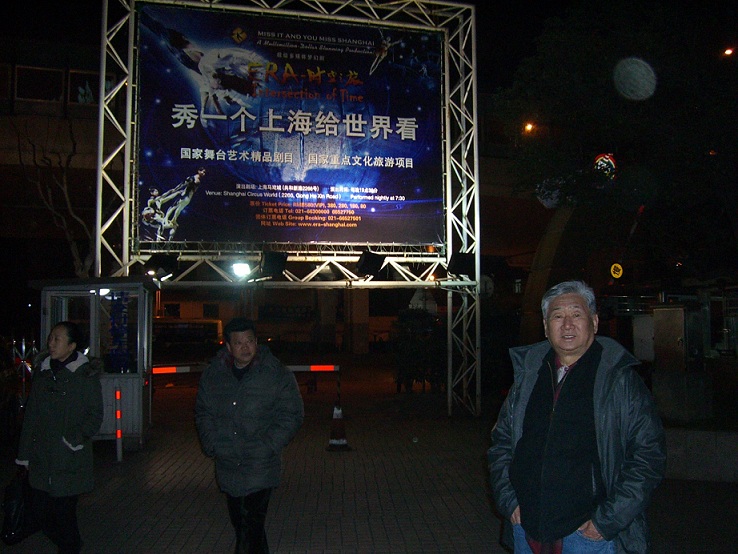
After lunch, we said goodbye to the picturesque Hangzhou, and the car drove us to Shanghai. After about three hours, we entered downtown Shanghai. The tour guide took us to a place called "Tongrentang" pharmacy. I thought it was a branch of the famous "Beijing Tongrentang". When I walked in, it was different. There was a plaque saying "Nanjing Tongrentang" and there was an inscription by General Secretary Jiang Zemin at the door. I don't know how they got it. After sitting down, the pharmacy manager gave a welcome speech. First, there was a free Tibetan medicine foot massage. Pots of yellow-brown water that evaporated with the flavor of traditional Chinese medicine were placed in front of you. Ten minutes later, the masseur came to give you a foot massage. This program was really good. After a week of hard work, your legs and feet felt much more relaxed after the massage. But the next project was unacceptable. The manager invited a group of "traditional Chinese medicine doctors with senior professional titles" to take pulses and diagnose everyone, and immediately wrote prescriptions and bought medicines. I said I had cardiovascular disease, and he immediately wrote me a large prescription worth more than 6,000 yuan. My wife is also a doctor and wanted to ask him some questions, but he seemed impatient. Of course, we won’t just buy thousands of dollars worth of medicine and take it home. Later, when we met friends who were traveling together, we all felt the same way. No one bought his medicine. This overly commercial way of treating patients and selling medicines is not suitable for promotion. It is not treating diseases and saving lives at all, but betraying the professional dignity of intellectuals. In the evening, I watched a wonderful performance by the Shanghai Circus. Like the song and dance performance I watched in Hangzhou yesterday, it was a first-class performance in contemporary China. The stage lighting, scenery, and sound effects were all things I had never seen before. I really enjoyed a rich cultural feast. The retail ticket prices for the performances are RMB 300, 500, and RMB 800, which is a special treatment for overseas Chinese. We only received RMB 500 for the three performances, and they all had better seats. In China, overseas Chinese are no longer as popular as they were during the early days of reform and opening up in the early 1980s, because China was too poor at that time, and overseas Chinese's foreign exchange was very important to the development of the motherland. Nowadays, China has become the country with the largest foreign exchange reserves in the world, but the motherland still has not forgotten us and arranged such a good travel plan for overseas Chinese. We will not forget the friendly reception given to us by the people of the motherland. Here, I would like to say a deep "thank you" to the leaders and executors who proposed and arranged this travel plan.
Shanghai Circus Advertisement: Show Shanghai to the world
Wonderful entertainment performances in Hangzhou Thousand-Hand Guanyin
On the night when the trip was about to end, I happily met my high school classmates - old classmates from the 48th Alumni Association of Nanyang High School. We broke up when we graduated from high school in Shanghai in 1952. By this year, about a third of our classmates have met in heaven. This year, Nanyang Middle School celebrated its 115th anniversary. Our Alumni Association held a birthday party for some classmates’ 80th birthdays. I was the youngest classmate in the class. They included me in the birthday celebrations according to the abacus principle of five to one, and gave me a "Shoubi Nanshan" thermos cup as a gift. The students were extremely excited to get together. Talking about the fun things they had together when they were students, everyone burst out laughing, as if they were back in those prosperous times; when talking about their personal experiences, they all had the joy of success and the misfortune. But each of us is proud of Nanyang. Nanyang has taught us solid basic knowledge, serious methods of doing things, and loyal principles of life, laying a good foundation for our lives. Most of our people are engaged in industry, science and technology, and education, and rarely participate in politics. This is inseparable from the academic philosophy of the founder of our school, the well-known private educator Wang Peisun. Our school has trained literary giants such as Ba Jin and a large number of well-known scientific and technological talents. We all still remember Ostrovsky's famous saying, "How a person's life should be spent so that when he looks back on the past, he will not regret for wasting his years, nor will he be ashamed of doing nothing." This sentence has guided us throughout our lives. When we get together, we can all say without shame that we have made a contribution to the industrialization and four modernizations of the motherland, and we have no regrets and are worthy of this era. Early the next morning, the members of the tour group shook hands and said goodbye after a sumptuous breakfast, and were sent to the airport to fly back to different countries. Everyone left each other's mailing addresses, but no one could tell when they would meet again. It depends on whether there is fate. My cousin in Shanghai invited me to stay one more day in Shanghai, visit his home, and take me to Qibao Old Street to reminisce about the past. According to his words, he returned to China to see the new look of the motherland, and then took me to review the old look. Qibao Town is a small town in Minhang on the outskirts of Shanghai, one hour away from downtown Shanghai. It retains the original appearance of the lives and residences of ordinary people in Shanghai in the past. The old street is only wide enough for 3-4 people to walk side by side. Both sides are covered with vermilion shops. There are conspicuous advertisements in front of each house to attract you to stop. Every house has a front store and a back yard (plus a workshop). The attic is the place for living and living. The layout is very compact, and the stalls at the door must not be crowded. Going to the street, here is a true portrayal of Shanghainese's "land expropriation". Every inch of land in Shanghai is worth every inch. Passing through the end of the small street, a small river flows slowly. Small towns in the south are built on rivers, and tea shops and restaurants are located on wider streets. A large white wall with the characters "Jiang" and "Dang" caught my eye. This is the most original advertisement of old Shanghai. At a glance, I can tell that it is the sign of a pickle shop and a pawn shop. These traces can no longer be found in urban Shanghai. Qibao Old Street is very similar to the Fahua Town Road where I lived when I was a child. At that time, I lived in my grandma’s house, and I had to carry my schoolbag through the small street to go to school every morning. Along the way, I liked to kick the ‘little rubber ball’ through the crowd. Year after year, I also developed a good skill at playing football in the alley. Sometimes I would accidentally kick the ball into an old man’s bookstall, and he would always look at me with his hateful but loving eyes. I passed by there every day, and gradually we became good friends. Sometimes when I came back from get out of class, he liked to ask me to sit next to him and show me the latest graphic novel for free. Every time I returned to Shanghai after work, I would go to the bookstall to see this dad. One year, when I walked through the small street, the bookstall disappeared. I was stunned there for a long time. I knew what had happened. I silently wished him a happy life in the Western Paradise. What a good man! When I was growing up, I always remembered three people who were particularly destined for me. They were not related to me, but from their actions, I felt their special care and love for me. One was my music teacher when I was in elementary school in Yunnan, the other was my math teacher when I was in elementary school in Shanghai, and this old man with childish face and gray hair. They are my first teachers and my benefactors in my heart. I will never forget them. There is an old saying in China that "food is the most important thing for the people." Eighty percent of Qibao Old Street is shops selling food. Old Shanghai's famous plum blossom cakes, crab apple cakes, stinky tofu, glutinous rice balls, soup dumplings, white-cut mutton, etc. are all available in a dazzling array. For dinner, we enjoyed typical Shanghainese dishes such as shredded eels with paste, crab powder with shrimps, and red barbecue braised noodles at a traditional Shanghai restaurant. I had a great time on this day.
>Qibao’s Teahouse and Restaurant
Teahouse is a place where opera is performed
Advertisement for Old Shanghai Sauce Garden
The "$49 Jiangnan Tour" I participated in is over, and I also want to stop writing about my "Hometown Tour" here. In "Hometown Trip", I didn't write much about the beautiful scenery in the south of the Yangtze River. I mainly wrote about what I saw and heard on the trip back to my hometown, and expressed some of my feelings and inner thoughts in the form of essays for comfort. I also hope that my friends who have had similar experiences to me can trigger some memories and reflections on the ups and downs we have gone through. What I saw during this trip was a China that is developing rapidly and becoming increasingly powerful, a China full of opportunities and hope, a China that every Chinese can be proud of, but also a China with many problems and contradictions on the way forward. However, I firmly believe that the current Chinese leaders are a knowledgeable generation. They are younger than us and should have less residual feudal consciousness in their thinking. They have sufficient understanding of democracy, freedom, and civil rights. They can clearly see the problems existing in the development of Chinese society and have the ability to solve them. They are working hard to build a more democratic, freer, and stronger China. However, it is a country with a population of more than 1 billion. The foundation of culture and education is still very poor. Realizing democratic reform does require a step-by-step process, but the shortcomings of corruption and bureaucracy must be eradicated immediately. I sincerely wish our motherland will make steady progress on the road to revitalization, and thank the readers for spending three precious months with this article. (over)
Sources and usage
This piece is republished or synchronized with permission and keeps a link back to the original source.